000
AXNT20 KNHC 081001
TWDAT

Tropical Weather Discussion
NWS National Hurricane Center Miami FL
1205 UTC Wed May 8 2024

Tropical Weather Discussion for North America, Central America
Gulf of Mexico, Caribbean Sea, northern sections of South
America, and Atlantic Ocean to the African coast from the
Equator to 31N. The following information is based on satellite
imagery, weather observations, radar and meteorological analysis.

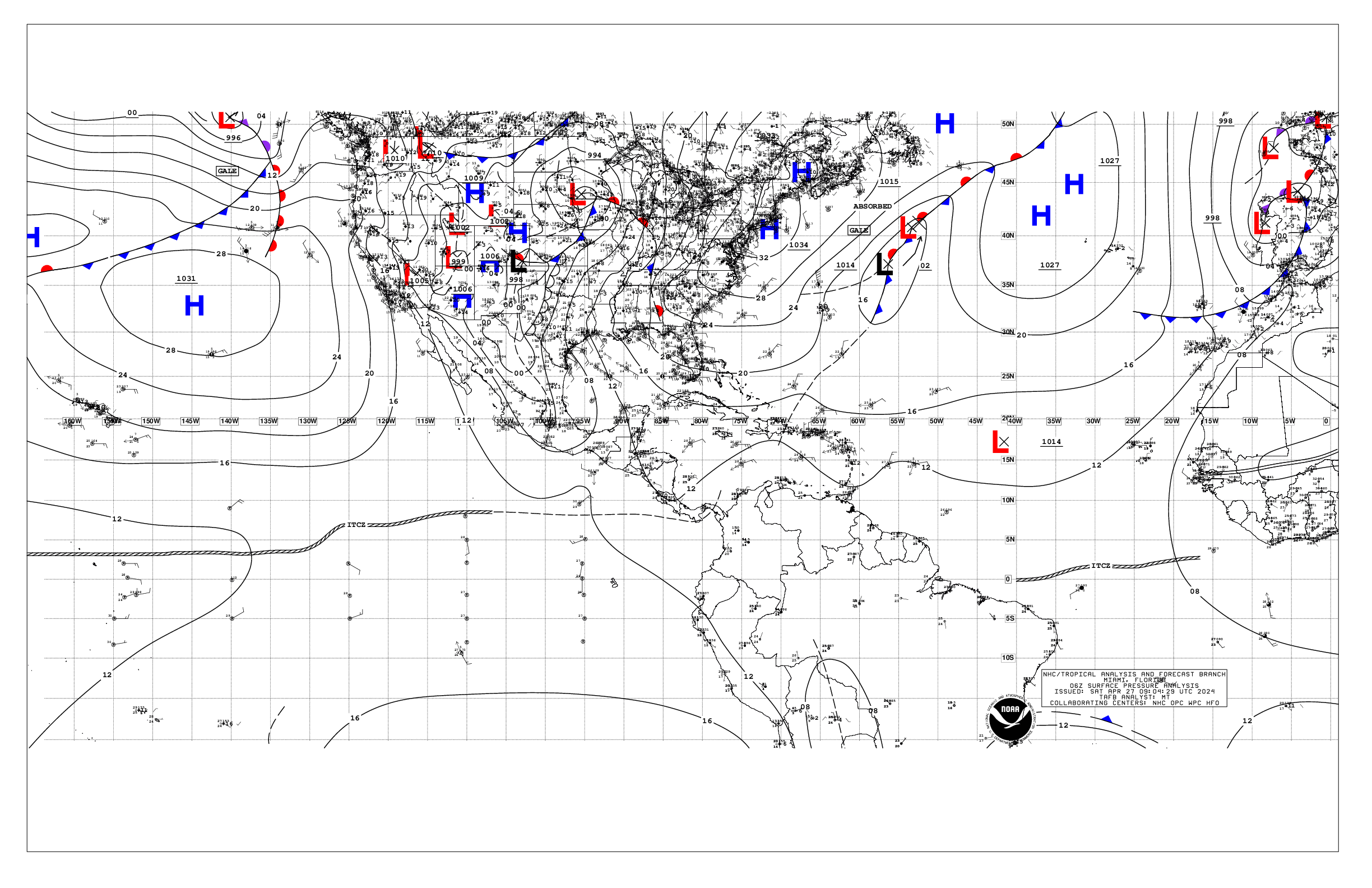
Based on 0600 UTC surface analysis and satellite imagery through
0900 UTC.

...MONSOON TROUGH/ITCZ...

The majority of the monsoon trough remains inland over Africa,
and extends briefly southwestward off the west coast of Africa
to near 09N18W. The ITCZ then begins and continues to 04N27W to
02N40W to 03N44W to the coast of Brazil near 02N50W. Scattered
moderate to isolated strong convection is seen S of 04N between
32W and 42W. Scattered moderate convection is well southeast of
the ITCZ from 02N to 04N and east of 10W to well inland Africa.

...GULF OF MEXICO...

The Bermuda subtropical ridge extends west-southwestward to the
north-central Gulf. This is causing light to gentle winds in the
eastern Gulf and moderate to fresh ESE winds over the western
Gulf. Seas are 2 to 4 ft in the eastern Gulf and 4 to 6 in the
west. No significant convection is is occurring in the basin, but
haze due to agricultural fires in SE Mexico continues to restrict
visibility across portions of the western Gulf.

For the forecast, fresh SE winds will prevail across much of the
Gulf into Thu night, ahead of a cold front. Locally strong winds
will pulse nightly through late week off the northern and western
Yucatan Peninsula. Haze due to agricultural fires in southeastern
Mexico persists in the western Gulf. Looking ahead, the cold front
will move off the Texas coast into the northwest Gulf Thu night,
shift southeast, then slow down and weaken further as extends from
South Florida to Veracruz, Mexico, by late Sat.

...CARIBBEAN SEA...

A persistent broad mid to upper-level trough is over the western
Atlantic, with its southern portion stretching southwestward into
to the north-central Caribbean. Scattered moderate convection is
noted in and around the Windward Passage, extending eastward
across the the eastern Greater Antilles and adjacent Caribbean
waters, in association with this trough. The trough will
gradually weaken and move farther northeast of the area through
Thu night. Abundant deep- tropical moisture remains prevalent in
the eastern Caribbean. This in combination with ample instability
provided by the aforementioned trough should result in more
convection, some locally heavy, over that part of the sea through
at least early Thu. Please see local weather advisories for more
information.

Moderate to fresh trades are occurring over the south-central
Caribbean, with seas of 4 to 6 ft. The remainder of the basin
exhibits gentle to moderate trades and seas of 3 to 5 ft.

For the forecast, high pressure centered just SE of Bermuda will
support moderate to fresh trade winds over the south-central and
SE Caribbean into the weekend. Meanwhile, expect pulses of fresh
to locally strong E winds mainly at night across the Gulf of
Honduras starting today, between the high pressure and lower
pressure over the western Gulf. Gentle to moderate winds and
moderate seas will persist elsewhere.

...ATLANTIC OCEAN...

The SW North Atlantic continues to be under the influence of weak
high pressure of 1018 mb centered southeast of Bermuda near
30N53W. The associated gradient is allowing for moderate to fresh
trade winds to exist south of about 23N and west of 60W and from
18N to 21N between 45W and 57W. A weak trough bisects the Florida
peninsula from N to S. A cold front extends from near 31N26W
southwestward to 22N35W, where it becomes a stationary front to
18N42W. Scattered moderate convection is noted E of the front as
well as within 90 nm either side of a line from 18N42W to
Guadeloupe.

Seas of 8 to 10 ft due to long-period north swell are north of
24N between 34W and 53W. Moderate west to northwest winds are
over this area of seas. Light to gentle winds along with moderate
seas are elsewhere.

For the forecast west of 55W, the moderate to fresh winds E of
23N will diminish tonight as the high pressure shifts E. Expect
fresh SW winds off northeast Florida starting tonight ahead of a
cold front moving off the Carolinas.

$$
Konarik



 NHC on Facebook
 Twitter
 YouTube
 NHC Blog: