000
AXPZ20 KNHC 261603
TWDEP

Tropical Weather Discussion
NWS National Hurricane Center Miami FL
1605 UTC Fri Jun 26 2026

Tropical Weather Discussion for the eastern Pacific Ocean from
03.4S to 30N, east of 120W including the Gulf of California, and
from the Equator to 30N, between 120W and 140W. The following
information is based on satellite imagery, weather observations,
radar, and meteorological analysis.

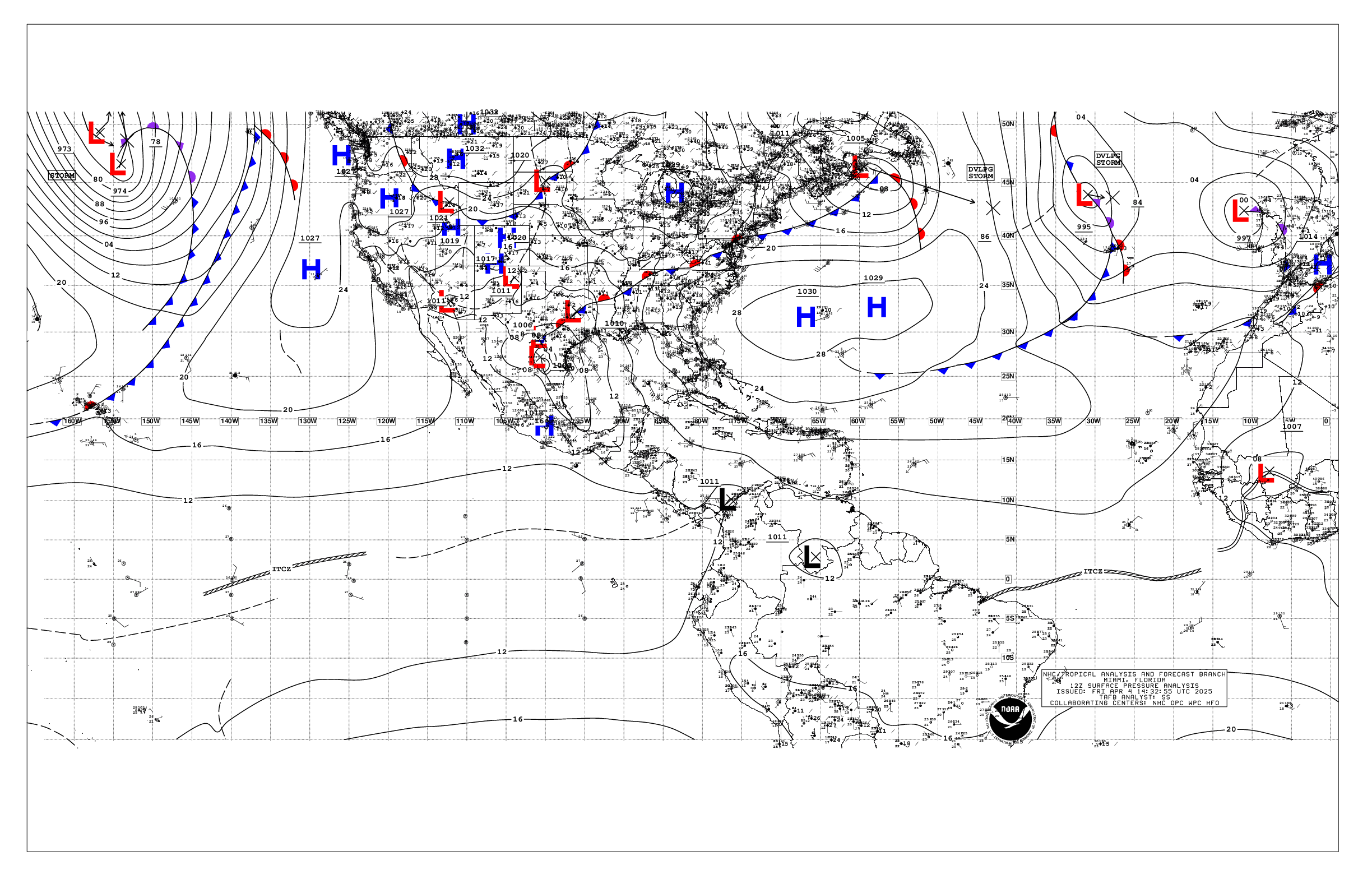
Based on 1200 UTC surface analysis and satellite imagery through
1545 UTC.

...TROPICAL WAVES...

The southern portion of a Caribbean tropical wave is along 77W
reaching southward to near 05N. It is moving westward at 10 to 15
kt. Numerous moderate to strong convection is from 06N to 09N
east of 82W to inland Colombia near 75W.

A tropical wave has its axis along 88W extending northward across
El Salvador and Belize. It is moving westward near 10 kt. No
significant convection is evident along the wave axis at this
time.

A tropical wave has its axis near 109W from 08N to 13N, moving
westward around 10 kt. Scattered moderate convection is seen
from 12N to 17N between the wave and 104W.

A tropical wave has its axis near 126W from 12N to 21.5N. A 1009
mb low is along the wave at 19N125W as noted in satellite
imagery. It is moving westward at 10 to 15 kt. No significant
deep convection is occurring with this system this morning.

...INTERTROPICAL CONVERGENCE ZONE/MONSOON TROUGH...

The monsoon trough axis extends from northern Colombia to 10N84W
to 08N95W to 08N104W to 07N113W to 13N118W and to 11N126W, where
it transitions to the ITCZ to 06N135W to beyond 05N140W.
Scattered moderate convection is within 60 nm north of the trough
between 114W-118W, within 60 nm south of the ITCZ between
137W-140W, and within 30 nm of the trough between 91W-101W.

...OFFSHORE WATERS WITHIN 250 NM OF MEXICO...

Fresh to strong gap winds continue to pulse across the Gulf of
Tehuantepec this morning along with rough seas. This is due the
pressure difference between high pressure over south-central
Mexico and lowering pressure along the monsoon trough over the
eastern Pacific. Fresh southwest gap winds across the northern
Gulf of California are due to low pressure over the lower
Colorado River Valley. Gentle to moderate breezes and 4 to 5 ft
seas are noted elsewhere across Mexican offshore waters, with 1
to 3 ft in the Gulf of California.

For the forecast, lower pressure in the deep tropics will
continue inducing fresh to strong north to northeast gap winds
across the Gulf of Tehuantepec through late Sat. Elsewhere, winds
and seas across the Mexican offshore waters should be quiescent
through early next week. Looking ahead, large northwest swell
may move into the waters off Baja California Norte starting Sun
night.

....OFFSHORE WATERS WITHIN 250 NM OF CENTRAL AMERICA, COLOMBIA,
AND WITHIN 750 NM OF ECUADOR...

An overnight scatterometer satellite pass indicated fresh to
strong east to southeast gap winds across the Gulf of Papagayo
and off the coast of Nicaragua. Altimeter satellite data
indicates seas of at least 8 ft downstream of this plume.
Elsewhere winds are moderate or weaker. Seas are 7 to 9 ft in S
swell over the equatorial waters and 5 to 6 ft in SW swell over
the remainder of the offshore waters.

For the forecast, the pattern will continue support fresh to
occasionally strong gap winds and rough seas across the Gulf of
Papagayo through early next week. This plume of strong winds and
rough seas will reach as far west as the waters beyond 180 nm off
Guatemala and El Salvador through Sun night. Farther south,
large south swell moving into the equatorial waters will
continue through early next week.

...REMAINDER OF THE AREA...

A 1009 mb low is centered near 19N125W as mentioned above under
the Tropical Waves section. An overnight scatterometer satellite
pass indicates fresh northeast winds within 90 nm of the low in
the NW semicircle. An overnight altimeter satellite pass shows
seas of 8 to 9 ft there in a mix of swell. Elsewhere, broad
ridging dominates the remainder of the area north of 15N. The
moderate pressure gradient between the ridge and lower pressure
in the vicinity of the monsoon trough/ITCZ is forcing moderate to
fresh northeast trade winds between 10N and the ridge. Elsewhere,
winds across the open Pacific are moderate or weaker. Seas are 6
to 8 ft in mixed north and southwest swell.

For the forecast, the tropical wave near 109W is forecast to
encounter more favorable conditions for development over the
weekend across the central portion of the eastern Pacific basin.
A tropical depression is likely to form by the early to middle
part of next week while the wave moves westward to west-
northwestward across the waters well southwest of the
Revillagigedo Islands. Outside of this system, little change in
winds are expected for the next several days. Large southeast
swell should reach our southern border tonight and reach up to
01N with at least 8 ft seas for the next several days.

$$
Aguirre


 NHC on Facebook
 NHC on X
 NHC on YouTube
 NHC Blog: