000
AXPZ20 KNHC 181605
TWDEP

Tropical Weather Discussion
NWS National Hurricane Center Miami FL
1605 UTC Fri Sep 18 2026

Tropical Weather Discussion for the eastern Pacific Ocean from
03.4S to 30N, east of 120W including the Gulf of California, and
from the Equator to 30N, between 120W and 140W. The following
information is based on satellite imagery, weather observations,
radar, and meteorological analysis.

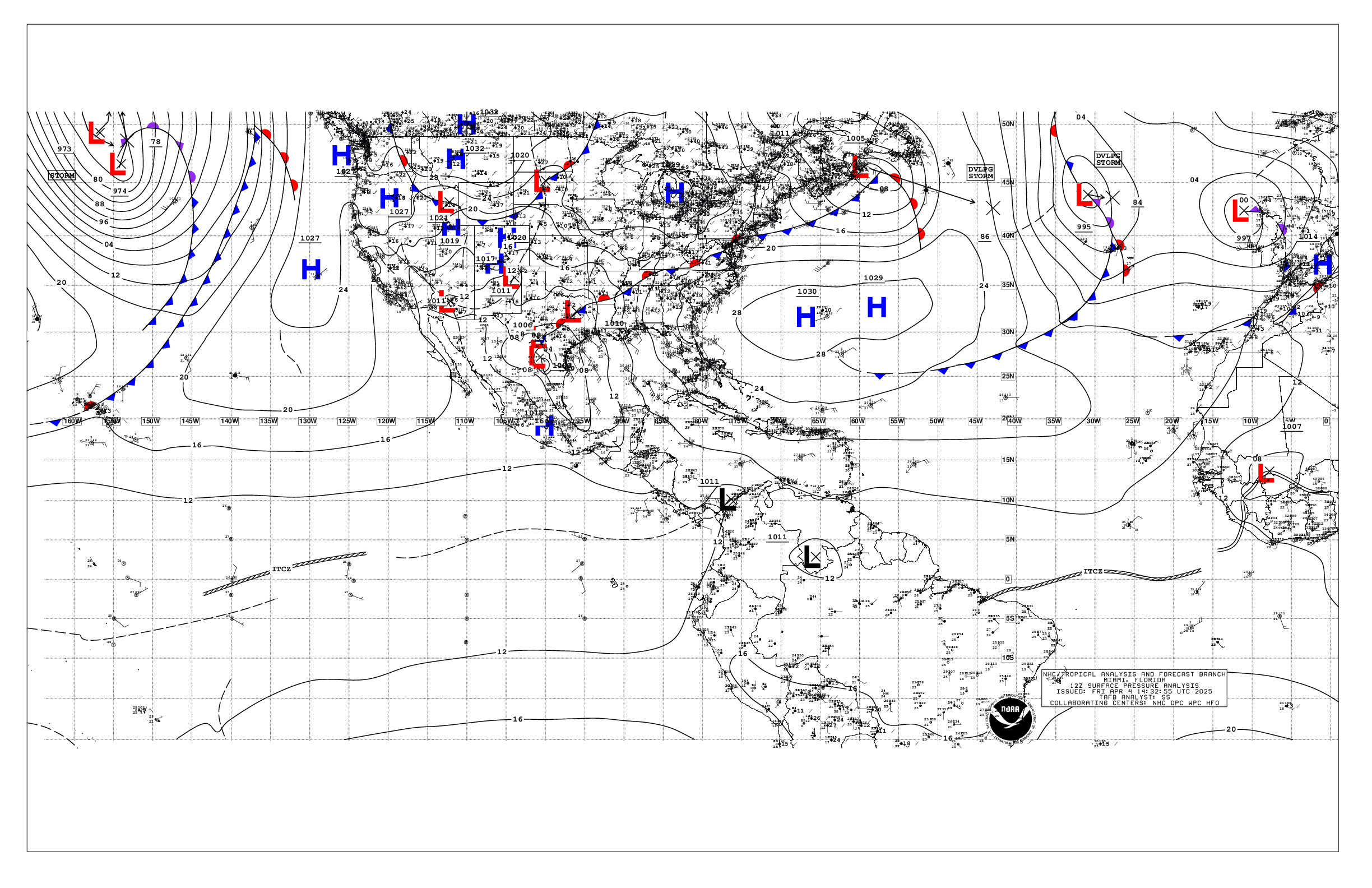
Based on 1200 UTC surface analysis and satellite imagery through
1545 UTC.

...SPECIAL FEATURES...

Invest EP98: A tropical wave with axis along 119W extends from
07N to 19N. Low pressure of 1009 is along the wave axis near
12N119W. These feature compose a broad area of low pressure
that is located well southwest of the southern tip of the Baja
California Peninsula. The wave is moving westward at about 10
kt. satellite imagery reveal disorganized numerous moderate to
strong convection from 08N to 17N between the wave and 125W.
Environmental conditions appear conducive for additional
development of this system, and a tropical depression is likely
to form this weekend as it moves westward across the western
portion of the eastern Pacific. The wave has a medium chance
of tropical cyclone formation chance through 48 hours and a high
of formation through 7 days.

Please refer to the latest NHC Tropical Weather Outlook at
website: www.hurricanes.gov for more details.

...TROPICAL WAVES...

A tropical wave, Invest EP99, has its axis extending from 16N103W
to 06N105W. It is moving westward at around 10 to 15 kt, and
is part of a broad area low pressure that is located about 700
nautical miles south-southwest of the southwestern coast of
Mexico. satellite imagery depicts disorganized scattered
moderate to isolated strong convection within 180 nm east of the
wave from 06N to 12N. Environmental conditions are conducive for
development, and a tropical depression is likely to form late
this weekend or early next week while it moves gradually north-
northwestward and northward off the coast of southwestern Mexico.

...INTERTROPICAL CONVERGENCE ZONE/MONSOON TROUGH...

The monsoon trough axis extends from northwest Colombia
southwestward to across the border between Panama and Colombia,
and continues to 08N78W to 10N86W to 09N91W to 08N101W to
06N108W to 12N115W and to 13N123W. It resumes at 15N135W to
beyond 13N140W. Numerous strong convection is seen from 04N to
08N between 77W-80W. Scattered moderate to isolated strong
convection is from 03N to 08N between 81W-92W, and within 120 nm
south of the trough between 114W-119W. Scattered moderate
convection is from 03N to 08N between 95W-102W.

...OFFSHORE WATERS WITHIN 250 NM OF MEXICO...

The pressure gradient between a ridge over the Gulf of America
and the eastern extension of the Pacific monsoon is supporting
strong to near-gale force north to northeast gap winds across
the Gulf of Tehuantepec. Seas with these winds are 6 to 8 ft.
Scattered to numerous showers and thunderstorms are over most of
the offshore waters, with numerous coverage of the activity
confined to the offshore waters of Jalisco and Colima. The
northern portion of tropical wave extends along 104W, northward
to near 17N. The gradient related to high pressure west of the
Baja California offshores is supporting moderate to fresh
northwest winds N of Cabo San Lazaro. Moderate or weaker winds
are elsewhere along with moderate seas, except for slight seas in
the Gulf of California.

For the forecast, winds will continue to pulse in Tehuantepec at
fresh to strong speeds through Sat. The environmental conditions
of the tropical wave along 104W are conducive for development,
and a tropical depression is likely to form late this weekend or
early next week while it moves gradually north-northwestward and
northward off the coast of southwestern Mexico. Regardless of
development, this system is forecast to bring fresh to strong
winds and moderate to rough seas to the Michoacan and Jalisco
offshores Tue night into midweek. Otherwise, moderate to fresh
northwest winds will persist along the Baja Peninsula offshores,
reaching strong speeds at night today and Mon.

...OFFSHORE WATERS WITHIN 250 NM OF CENTRAL AMERICA, COLOMBIA,
AND WITHIN 750 NM OF ECUADOR...

Fresh to strong northeast to east winds prevail across the Gulf
of Papagayo extending downstream to near 90W. Moderate easterly
winds from this gap event are affecting the outer offshores El
Salvador and Guatemala. Moderate or weaker winds prevail
elsewhere, except for moderate to fresh N winds in the Gulf of
Panama extending to about 07N. Seas across the offshores are
moderate in SW swell.

For the forecast, the pressure gradient between the ridge north
of the area and the eastern Pacific monsoon will support pulsing
fresh to occasionally strong easterly winds and moderate to rough
seas across the Papagayo region into early Sat, then pulsing to
moderate to fresh thereafter. Moderate winds and seas will
prevail elsewhere.

...REMAINDER OF THE AREA...

The remnant 1006 mb low of former Tropical Depression Fifteen-E
is located near 16N136W. Fresh to strong northeast to east winds
are within 480 nm northern semicircle of the low. Seas are 7 to
10 ft with these winds. satellite imagery indicates numerous
moderate to strong convection from 15N to 19N between 131W and
136W. Moderate to fresh northeast northeast to east winds
are along the northern portion of the tropical wave. Invest
EP98, along 119W. These winds extend northward to near 22N
between 115W and 128W. Seas are in the range of about 6 to 9 ft
with these winds as suggested by recent satellite altimeter data
passes. Elsewhere, winds are moderate or weaker and seas are
moderate, except rough in the vicinity of Invest EP98.

For the forecast, see the Special Features and the Tropical Waves
Section. Otherwise, environmental conditions appear conducive
for some development of this system as it moves westward to west-
southwestward, and a tropical depression could form well to the
south or southeast of the Hawaiian Islands by the middle to
latter part of next week.

$$
Aguirre


 NHC on Facebook
 NHC on X
 NHC on YouTube
 NHC Blog: