927
AXNT20 KNHC 161750
TWDAT

Tropical Weather Discussion
NWS National Hurricane Center Miami FL
1815 UTC Fri May 16 2025

Tropical Weather Discussion for North America, Central America
Gulf of America, Caribbean Sea, northern sections of South
America, and Atlantic Ocean to the African coast from the
Equator to 31N. The following information is based on satellite
imagery, weather observations, radar and meteorological analysis.

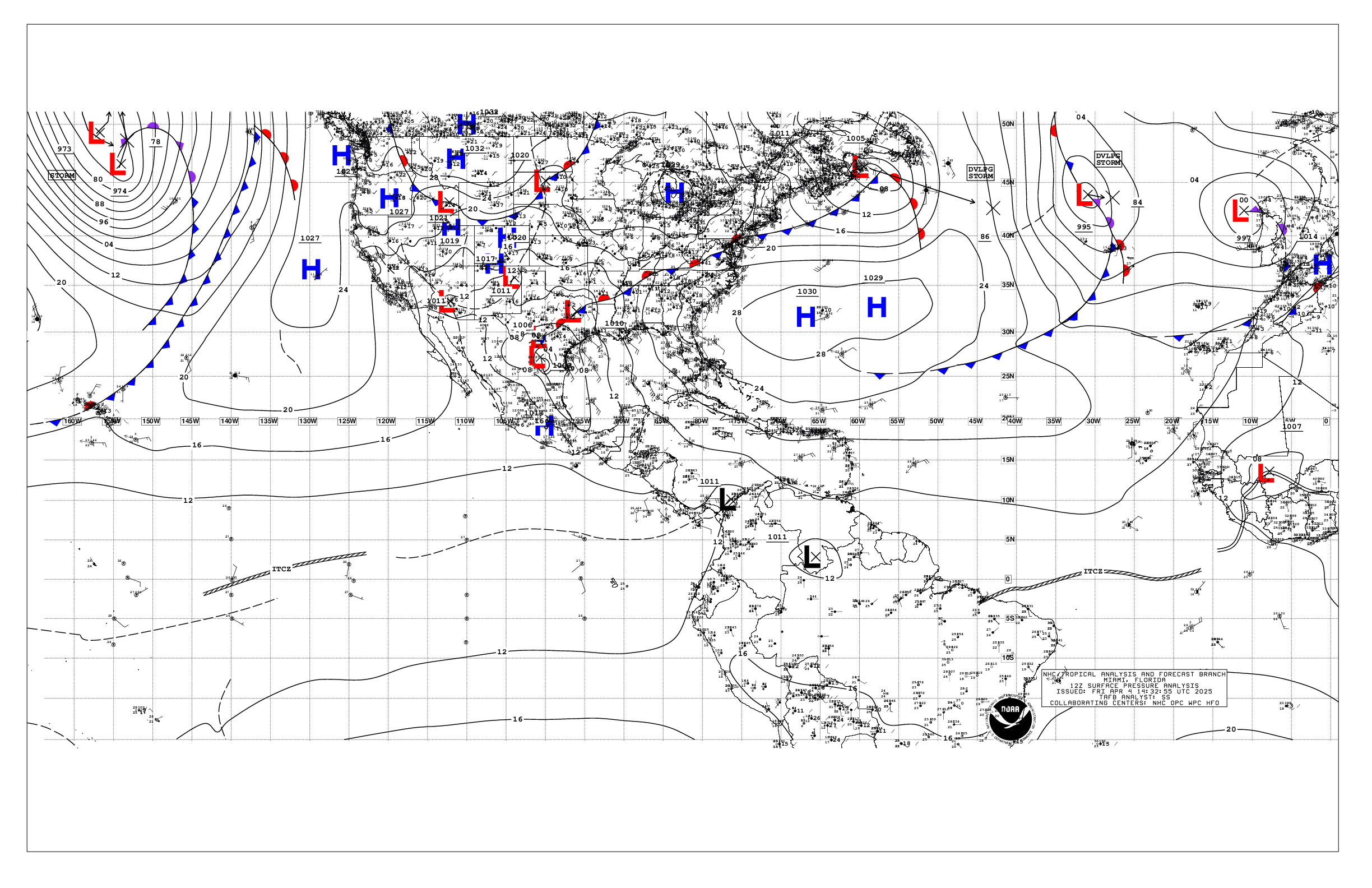
Based on 1200 UTC surface analysis and satellite imagery through
1800 UTC.

...MONSOON TROUGH/ITCZ...

A monsoon trough enters the Atlantic along the coastal border of
Senegal and Guinea-Bissau, then curves southwestward to 07N20W.
An ITCZ continues from 07N20W across 00N40W to the NE coast of
Brazil near 01S48W. Scattered showers are observed south of the
monsoon trough from 01N to 07N and between 15W and 24W. Scattered
moderate convection is observed from the Equator to 08N between
10W and 18W, and from the Equator to 07N between 24W and 50W.

The eastern end of the East Pacific monsoon trough is triggering
scattered moderate convection in the southwestern Caribbean Sea
S of 13N and W of 74W.

...GULF OF AMERICA...

Recent satellite imagery and surface observations indicate smoke,
originating from agricultural fires, over portions of the W Gulf.
Observations from Tampico indicated haze with visibility down to
2-5 miles between 1200-1500 UTC today. Otherwise, ridging prevails
across the Gulf. Moderate to fresh SE winds and seas of 4-6 ft
prevail across the Gulf W of 88W, with gentle to moderate SE winds
and seas of 1-4 ft across the Gulf E of 88W.

For the forecast, the pressure gradient between high pressure
over the eastern Gulf and relatively lower pressure in Texas and
in eastern Mexico will maintain moderate to fresh SE winds and
moderate seas across the western Gulf through early Tue evening.
Pulsing fresh to locally strong E winds are likely each afternoon
and evening, north of the Yucatan Peninsula as a trough develops
daily and drifts westward. Smoke from agricultural fires in
southeastern Mexico is leading to hazy conditions over most of the
western Gulf zones.

...CARIBBEAN SEA...

Convergent trade winds are coupling with divergent flow aloft to
produce scattered showers and isolated thunderstorms across the
eastern Caribbean E of 70W, including waters near Puerto Rico and
the Virgin Islands. Refer to the Monsoon Trough/ITCZ section for
additional weather in the Caribbean Basin. A surface ridge
extending southwestward from a 1026 mb high near 32N47W to beyond
the central Bahamas is supporting moderate to fresh E to ESE
winds and seas of 4 to 7 ft in the SW, central, and E basin, as
well as in the Gulf of Honduras. Gentle to moderate ENE to SE
winds with 2 to 4 ft seas are found elsewhere in the northwestern
basin.

For the forecast, fresh to locally strong E to SE winds will
pulse in the Gulf of Honduras during the late afternoon and
nighttime hours through next week. Moderate to fresh trades along
with moderate seas over the south-central part of the basin will
continue through tonight. Similar conditions are expected in the
lee of Cuba and near the Windward Passage on Fri and Sat nights.
Moderate to fresh trades and rough seas will persist over the
Atlantic waters near and east of the Lesser Antilles through Sun
night. Looking ahead, increasing trades along with building seas
are expected across the eastern part of the seas beginning Sun
night. These conditions are forecast to shift westward across the
central part of the basin and to southwestern Caribbean around the
middle of next week.

...ATLANTIC OCEAN...

A pronounced upper-level trough is interacting with a surface
trough analyzed from 26N65W to 21N68W, resulting in the
development of scattered showers and thunderstorms from 18N to 27N
between 62W and 69W. In the central and eastern Atlantic, a
surface trough/former cold front curves southwestward from near
31N26W to 25N49W. Convergent winds ahead of this feature are
supporting scattered shower development from 10N to 25N and E of
47W. Seas behind this feature are analyzed at 7-9 ft. Convergent
trades are causing scattered moderate convection in an area from
06N to 09N between 49W and 59W. Refer to the Monsoon Trough/ITCZ
section for additional convection in the Atlantic Basin.

Recent satellite imagery shows a plume of Saharan Dust emerging
off Africa, generally from the Equator to 16N and E of 35W.
Visibility may be reduced in this area. The pressure gradient
between a 1026 mb high near 32N47W and lower pressures in the
tropics supports moderate to fresh E winds across much of the
Atlantic S of 20N, and moderate or weaker E winds to the N of 20N.
E winds are locally fresh to strong in a region from 06N to 16N
between 40W and 58W, accompanied by seas of 7-9 ft. Otherwise,
moderate seas prevail across much of the Atlantic basin.

For the forecast west of 55W, broad high pressure over the
central Atlantic extending westward to across Florida will change
little through early next week controlling the wind flow pattern
over the region. A weakening cold front will stall just N of 31N
and W of 70W late in the weekend. In the long term, fresh
southerly winds are expected to develop over the far western
waters starting late Tue in advance of a cold front that will be
moving across the southeastern U.S. These winds may become fresh
to strong, south to southwest in direction, during the middle of
next week. Moderate to fresh NE to E winds will pulse north of
Hispaniola and in the Windward Passage each night into next week.

$$
Adams



 NHC on Facebook
 X
X YouTube
 NHC Blog: