800
AXPZ20 KNHC 050939
TWDEP

Tropical Weather Discussion
NWS National Hurricane Center Miami FL
1005 UTC Mon Oct 5 2026

Tropical Weather Discussion for the eastern Pacific Ocean from
03.4S to 30N, east of 120W including the Gulf of California, and
from the Equator to 30N, between 120W and 140W. The following
information is based on satellite imagery, weather observations,
radar, and meteorological analysis.

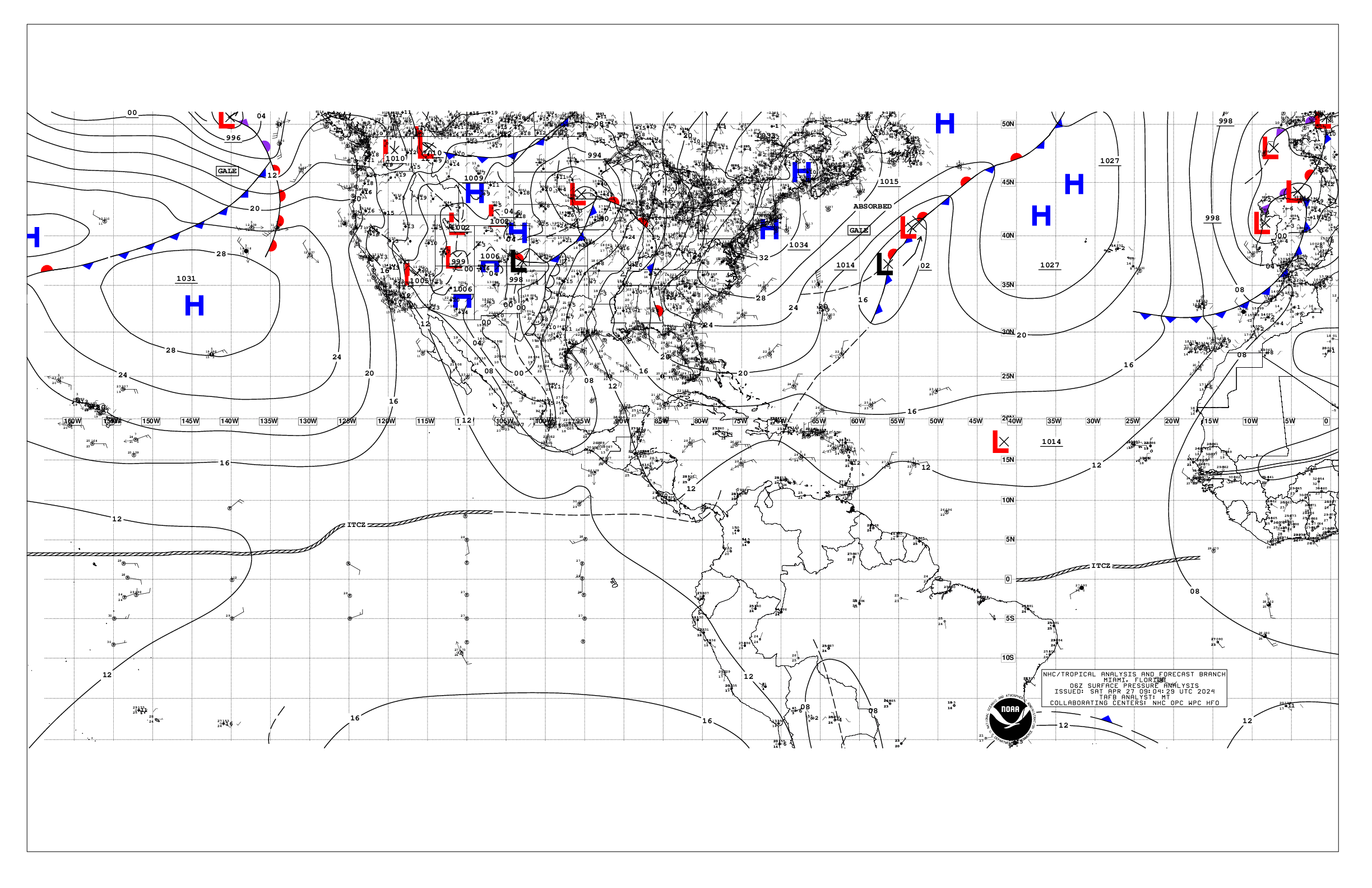
Based on 0600 UTC surface analysis and satellite imagery through
0935 UTC.

...SPECIAL FEATURES...

Hurricane Rachel is centered near 20.4N 115.6W at 05/0900 UTC,
moving west at 7 kt. Estimated minimum central pressure is 970
mb. Maximum sustained wind speed is 80 kt with gusts to 100 kt.
Peak seas are near 32 ft (10 M). Numerous moderate to scattered
strong convection is observed from 17N to 22N and between 112W
and 118W. A continued slow westward to west-northwestward motion
is expected for the next several days. Fluctuations in strength
are possible over the next few days, with gradual weakening
beginning by the mid part of the week. Swells generated by Rachel
will continue to affect the coast of the Baja California
Peninsula for the next couple of days. These swells are likely to
cause life-threatening surf and rip current conditions. Please
consult products from your local weather office.

Please read the latest HIGH SEAS FORECAST issued by the National
Hurricane Center at website -
https://www.nhc.noaa.gov/text/MIAHSFEP2.shtml and the latest
Rachel NHC Forecast/Advisory and Public Advisory at
www.hurricanes.gov for more details.

South of Southern Mexico:
A broad area of low pressure located just to the south of the
Gulf of Tehuantepec is currently producing scattered showers and
thunderstorm activity. Environmental conditions appear favorable
for gradual development, and a tropical depression is expected to
form during the middle to latter portion of the week while the
system moves slowly west-northwestward to northwestward, just
offshore of the southern to southwestern coast of Mexico. The
disturbance has a medium chance of formation in the next 48 hours
and a high chance in the next 7 days.

...INTERTROPICAL CONVERGENCE ZONE/MONSOON TROUGH...

The monsoon trough extends from the coast of Costa Rica near
10N85W to south of Mexico near 13N99W and then from 12N116W to
beyond 12N140W. Scattered moderate to isolated strong convection
is noted north of 02N and east of 107W. Similar convection is
found south of 15N and between 110W and 130W.

...OFFSHORE WATERS WITHIN 250 NM OF MEXICO...

Please see the Special Features section above for information on
Hurricane Rachel located SW of Baja California, Mexico.

Outside of the direct influence of Hurricane Rachel, high
pressure north of the area support gentle to moderate winds and
seas of 5-8 ft are found in the offshore waters of Baja
California N of 26N. Seas of 8 ft or greater generated by Rachel
are still impacting the offshore waters of Baja California Sur,
particularly between Cabo San Lazaro and Cabo San Lucas.

Elsewhere, scattered showers and isolated thunderstorms are
affecting the offshore waters of Mexico east of 105W and in the
southern Gulf of California. Gusty winds and higher seas are
noted with these storms. In the remainder of the Mexican
offshore waters, moderate or weaker winds and slight to moderate
seas prevail.

For the forecast, Rachel will move to 20.5N 116.7W this afternoon,
20.6N 118.2W Tue morning, 20.7N 119.7W Tue afternoon, 21.0N
121.0W Wed morning, 21.5N 122.5W Wed afternoon, and weaken to a
tropical storm near 22.0N 124.1W Thu morning. Rachel will change
little in intensity as it moves to the 22.4N 126.7W early Fri.
Seas will continue to subside near the entrance to the Gulf of
California this morning, and across the offshore waters of Baja
California Sur today as Rachel continues to slowly move away from
the area. Looking ahead, a broad area of low pressure located just
to the south of the Gulf of Tehuantepec is currently producing
scattered showers and thunderstorm activity. Environmental conditions
appear favorable for gradual development, and a tropical depression
is expected to form during the middle to latter portion of the
week while the system moves slowly west-northwestward to northwestward,
just offshore of the southern to southwestern coast of Mexico.
The disturbance has a medium chance of formation in the next 48
hours and a high chance in the next 7 days.

...OFFSHORE WATERS WITHIN 250 NM OF CENTRAL AMERICA, COLOMBIA,
AND WITHIN 750 NM OF ECUADOR...

A weak pressure gradient dominate much of the basin north of the
equator, allowing for light to gentle winds and slight to
moderate seas. Moderate to locally fresh southerly winds and
moderate seas are found between Ecuador and the Galapagos
Islands. Showers and isolated thunderstorms are occurring in the
offshore waters of Central America producing gusty winds and
higher seas.

For the forecast, weak high pressure centered north of the area
will maintain moderate or weaker winds over the offshore waters
of Central America and Colombia, along with mostly moderate seas
through the forecast period. Moderate to locally fresh southerly
winds and moderate seas will persist between Ecuador and the
Galapagos Islands over the next several days. Winds and seas may
increase across the offshore waters of Guatemala and El Salvador
this week as a broad area of low pressure becomes better organized
south of Mexico.

...REMAINDER OF THE AREA...

Please see the Special Features section above for information on
Hurricane Rachel located SW of Baja California, Mexico.

Outside of the area affected by Hurricane Rachel, high pressure
dominates the remainder of the tropical eastern Pacific,
supporting moderate or weaker winds and moderate seas.

For the forecast, Hurricane Rachel is near 20.4N 115.6W at 2 AM
PDT, and is moving west at 7 kt. Maximum sustained winds are 80
kt with gusts to 100 kt, and the minimum central pressure is 970
mb. Rachel will move to 20.5N 116.7W this afternoon, 20.6N 118.2W
Tue morning, 20.7N 119.7W Tue afternoon, 21.0N 121.0W Wed
morning, 21.5N 122.5W Wed afternoon, and weaken to a tropical
storm near 22.0N 124.1W Thu morning. Rachel will change little in
intensity as it moves to the 22.4N 126.7W early Fri. Looking
ahead, winds may increase and seas build over the eastern waters
later this week as an area of low pressures becomes better
organized.

$$
Delgado


 NHC on Facebook
 NHC on X
 NHC on YouTube
 NHC Blog: