000
AXNT20 KNHC 031626
TWDAT

Tropical Weather Discussion
NWS National Hurricane Center Miami FL
1815 UTC Sat Oct 3 2026

Tropical Weather Discussion for North America, Central America
Gulf of America, Caribbean Sea, northern sections of South
America, and Atlantic Ocean to the African coast from the
Equator to 31N. The following information is based on satellite
imagery, weather observations, radar and meteorological analysis.

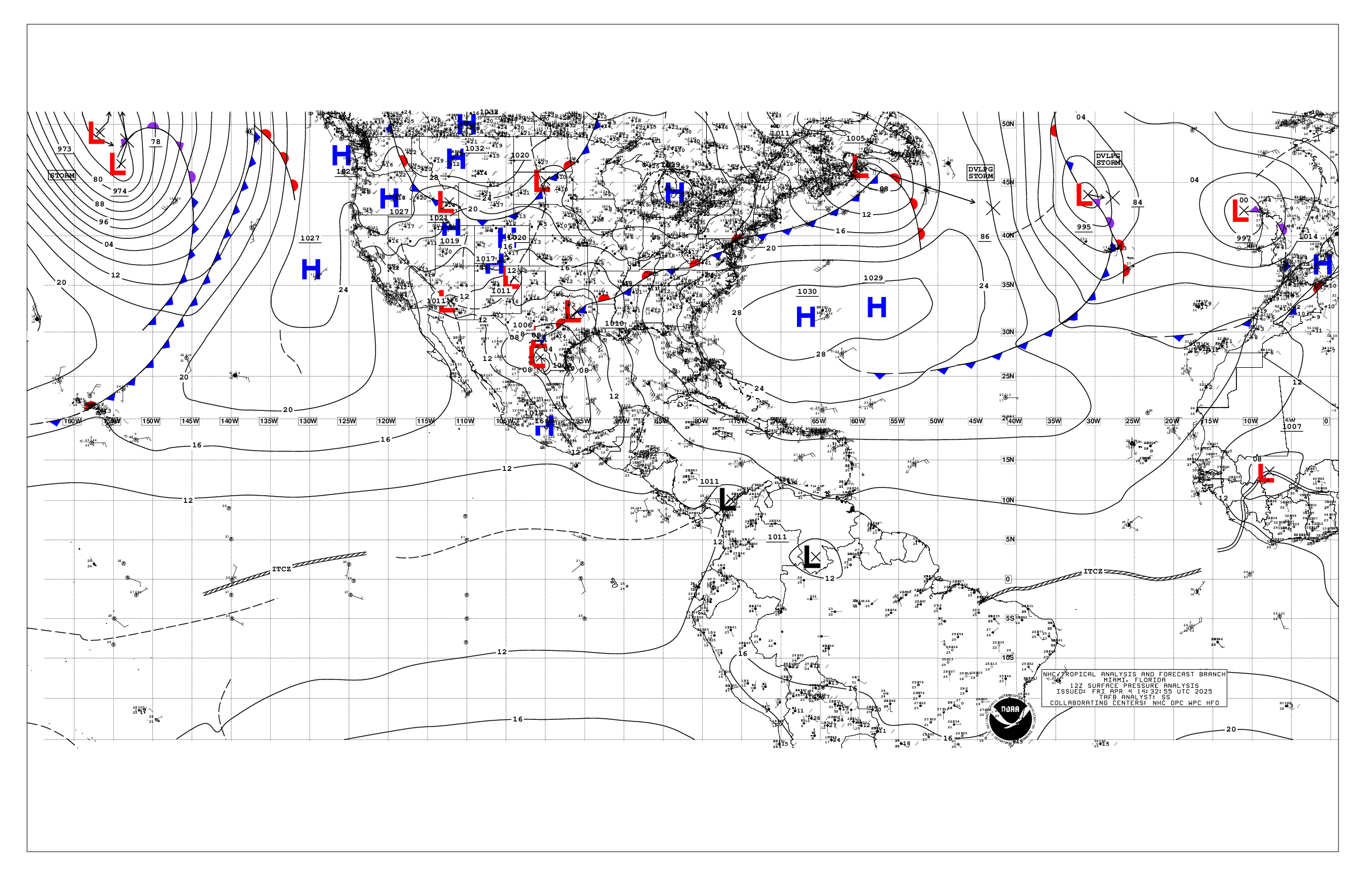
Based on 1200 UTC surface analysis and satellite imagery through
1600 UTC.

...TROPICAL WAVES...

A central Atlantic tropical wave is along 43.5W, south of 20N,
moving westward at 15-20 kt. Scattered showers are observed from
08N to 16N between 40W and 46W.

A central Caribbean tropical wave is along 76W, south of 21N,
moving westward at around 15 kt. A few showers are noted near the
northern portion of the wave.

...MONSOON TROUGH/ITCZ...

The monsoon trough enters the Atlantic near 21N17W and continues
southwestward to 10N40W. The ITCZ extends from 11N46W to 11N60W.
Numerous moderate to isolated strong convection is evident from
07N to 18N and between 46W and the Lesser Antilles.

...GULF OF AMERICA...

An upper-level low spinning over the Bay of Campeche supports
numerous showers and thunderstorms over the E Gulf waters, and
isolated to scattered showers elsewhere. The pressure gradient
between a surface trough along 94W and a high pressure system
north of Bermuda sustain moderate to locally strong SE winds over
the Gulf E of 91.5W. Light to gentle winds and slight to moderate
seas prevail W of 91.5W.

For the forecast, a broad upper-level low over the Bay of
Campeche will sustain scattered to numerous showers and
thunderstorms over much of the Gulf through the weekend. A
moderate pressure gradient between the subtropical ridge over the
western Atlantic and a surface trough in the central Gulf will
support moderate to locally strong SE winds over much of the
eastern half of the Gulf into Sun. A weak cold front is expected
to move across the NW Gulf this weekend, and stall from the
Florida panhandle to NW Gulf and to the SW by late Sun. Weak low
pressure may ride up along the front during the weekend and into
Mon enhancing winds some in the NW Gulf and in the north-central
Gulf. The front will remain stationary into midweek. Fresh to
locally strong NE winds are expected behind the front beginning
Tue, mainly in the NE and north-central Gulf, as strong high
pressure builds southward behind it. Light to moderate winds and
moderate seas are generally expected elsewhere across the basin
through the period.

...CARIBBEAN SEA...

Scattered showers and isolated thunderstorms are found over the NW and
in the SW Caribbean Sea. Similar activity is noted over and
around Hispaniola. A broad subtropical ridge north of the area
supports moderate to fresh easterly trade winds and seas of 4-8
ft across much of the basin, except for slight to gentle winds and
slight to moderate seas in the SW Caribbean.

For the forecast, a broad upper-level low over the Bay of
Campeche and abundant deep tropical moisture will support
scattered shower and thunderstorm activity this morning across the
far western Caribbean. High pressure north of the area will force
fresh to locally strong trade winds over the south-central
Caribbean and in the Gulf of Honduras through tonight. As a
frontal boundary reaches the waters north of the Bahamas, the
pressure gradient will slacken again from Sun through the middle
of next week leading to gentle to moderate trade winds across the
basin. Fresh trades may pulse off Colombia and in the Gulf of
Venezuela Mon night.

Of note, locally heavy rain and a few strong thunderstorms are
possible across Hispaniola this weekend, particularly over Haiti
and western Hispaniola. A mid-upper level trough will deepen
toward Hispaniola and develop a closed circulation near the island
by Sun. This combined with available moisture and local effects
as daytime heating, local sea breezes and mountain upslope lifting
will likely increase the chances of rain in the area.

...ATLANTIC OCEAN...

The interaction between a surface trough extending from 31N59W to
near Hispaniola and an upper trough over the western Atlantic
promote scattered showers and isolated thunderstorms from north of
Hispaniola to 28N between 65W and 71W. High pressure north of
Bermuda supports moderate or weaker winds and moderate seas across
much of the SW North Atlantic, W of 55W.

In the rest of the tropical Atlantic, high pressure centered west
of France sustains moderate to locally fresh easterly winds and
moderate seas between 30W and 55W. E of 30W and north of the
monsoon trough, a tighter pressure gradient allows for moderate
to locally fresh N-NE winds and seas of 6-10 ft.

For the forecast west of 55W, the combination of a trough
extending from SE of Bermuda to Hispaniola and a broad upper-level
trough digging southward will continue to support scattered
showers and thunderstorms through the weekend between Bermuda and
the Caribbean. High pressure will support mainly moderate easterly
winds and moderate seas through the forecast period S of 30N.
Looking ahead, a cold front may reach the waters off of NE Florida
Tue morning and stall, followed by strong NE winds and rough seas
through mid week in the offshore waters off NE Florida.

$$
KRV


 NHC on Facebook
 NHC on X
 NHC on YouTube
 NHC Blog: