000
AXNT20 KNHC 272126
TWDAT

Tropical Weather Discussion
NWS National Hurricane Center Miami FL
0015 UTC Wed Oct 28 2026

Tropical Weather Discussion for North America, Central America
Gulf of America, Caribbean Sea, northern sections of South
America, and Atlantic Ocean to the African coast from the
Equator to 31N. The following information is based on satellite
imagery, weather observations, radar and meteorological analysis.

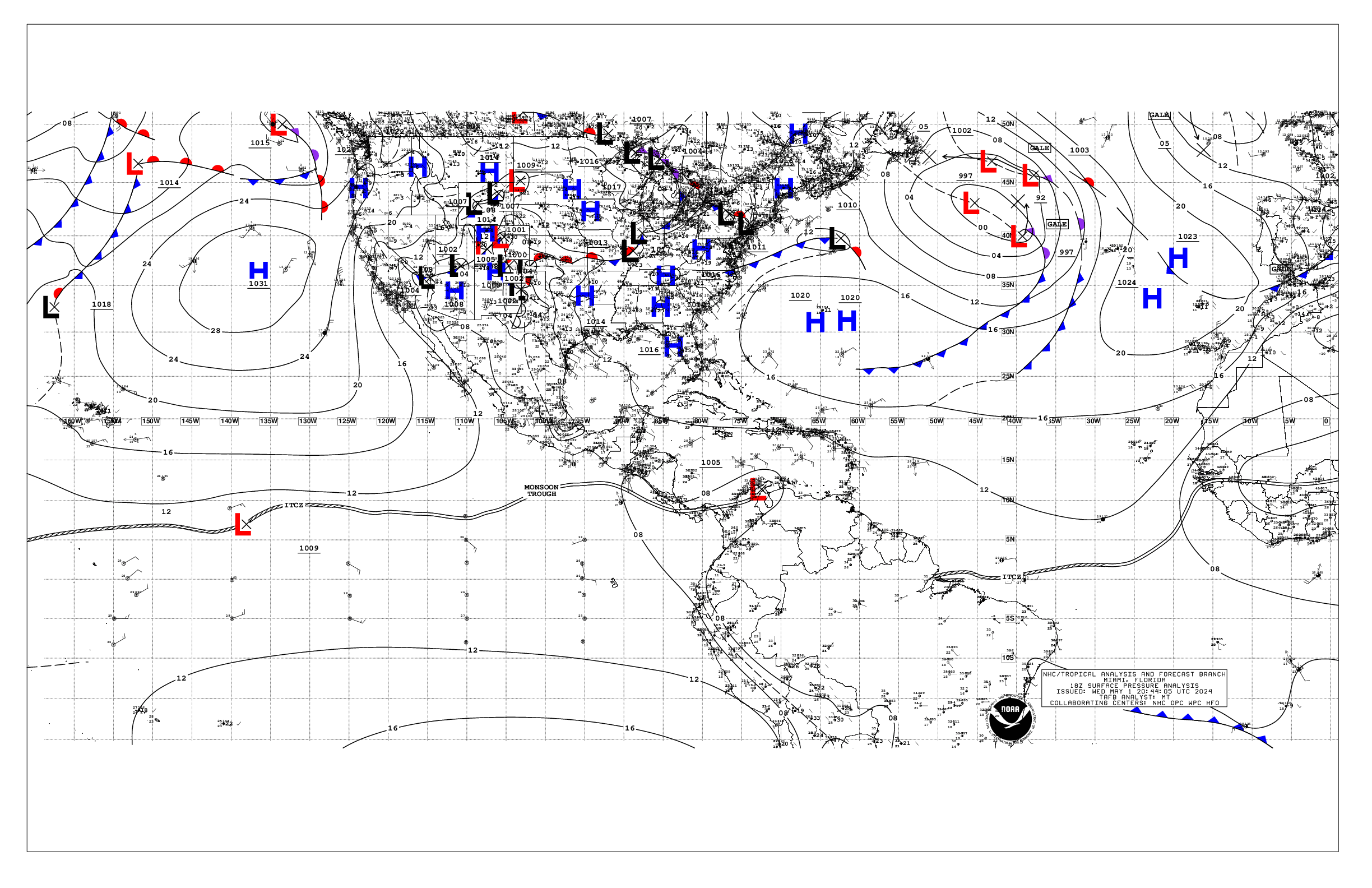
Based on 1800 UTC surface analysis and satellite imagery through
2130 UTC.

...SPECIAL FEATURES...

Gale Warning: A tight pressure gradient between a strong ridge over
the eastern United States and a stationary front extending from
31N60W to a 1010 mb low pres system over the NW Bahamas supports
a large area of strong to gale-force NE winds and rough to very
rough seas across the waters north of the front and west of the
low. Scattered to numerous showers and thunderstorms are
associated with these features, more concentrated from 23N to 29N
between 66W and 73W. Abundant tropical moisture will remain in
place in this area, favoring periods of locally heavy rain over
parts of eastern Cuba, Hispaniola and the Bahamas during the next
few days, resulting in localized flooding.

Winds will diminish below gale-force by this evening. However,
fresh to strong winds and rough to very rough seas in NE swell
will persist to the north of the front through the workweek and
into the upcoming weekend, gradually diminishing. Mariners are
urged to remain alert to these dangerous marine conditions and
take the necessary precautions to avoid these affected areas.

Please, see the latest NWS High Seas Forecast issued by the
National Hurricane Center at website
https:www.nhc.noaa.gov/text/MIAHSFAT2.shtml for further details.

...MONSOON TROUGH/ITCZ...

The monsoon trough reaches the Atlantic through the coast Africa
near 11N15W and continues to 10N20W. The ITCZ extends from 10N20W
to 10N50W to near 08N60W. Scattered moderate convection is noted
from 07N to 12N between 30W and 57W.

...GULF OF AMERICA...

High pressure over the eastern of the United States extends a
ridge across the Gulf waters. The pressure gradient between the
ridge and low pres over the NW Bahamas is supporting moderate to
fresh winds E of 90W. Moderate to rough seas are over these
waters. Gentle to moderate winds, and moderate seas are found west
of 90W.

For the forecast, a tight pressure gradient between a strong
ridge over the eastern United States and a complex weather system
over the Bahamas will force fresh to strong NE to E winds and
rough seas over the E Gulf into Thu. Winds and seas will gradually
diminish late this week into the weekend. Elsewhere, gentle to
moderate winds and moderate seas will prevail through the forecast
period.

...CARIBBEAN SEA...

A surface trough extends from low pres over the NW Bahamas across
central Cuba and across the western Caribbean. Moderate to fresh
northerly winds and moderate seas are found N of 16N and W of the
trough. Moderate winds and moderate seas are found over the
eastern Caribbean east of 70W. Light to gentle winds, and slight
to moderate seas, prevail elsewhere.

For the forecast, the surface trough will remain nearly
stationary. Ample tropical moisture and upper-level divergence
support scattered showers and isolated thunderstorms especially E
of the trough. The surface trough will gradually weaken through
the middle of the week. Winds and seas will diminish in the W
Caribbean Wed. Otherwise, moderate to locally fresh trade winds in
the E Caribbean will continue over the next few days, gradually
extending westward this week and into the upcoming weekend.

...ATLANTIC OCEAN...

A Gale Warning is in effect for the SW North Atlantic. Please, see
the Special Features section above for more information.

Aside from the Gale conditions discussed in the Special Features
section above, a stationary front extends from 31N34W to 29N40W.
Moderate to fresh winds, and moderate seas are west of the front
to near 55W. Rough seas are found N of 27N and E of the front to
28W. Elsewhere, high pressure dominates the waters N of 20N,
anchored by a 1020 mb high centered near 26N36W. Light to gentle
winds, and moderate seas are in the vicinity of the high center.
Gentle to moderate winds, and moderate seas prevail elsewhere.

For the forecast west of 55W, winds will diminish to just below
gale-force this evening, but strong NE to E winds and rough to
very rough seas will persist north of 27N and west of 65W through
mid week as the low pressure moves to the southwest and the front
weakens. Weak low pressure will form southwest of Bermuda by Fri,
then lift to the northeast and reinforce the front waters between
the central Bahamas and Bermuda. Expect fresh NE winds and seas
to 7 ft north of the front through Sun.

$$
AL


 NHC on Facebook
 NHC on X
 NHC on YouTube
 NHC Blog: