000
AXNT20 KNHC 291052
TWDAT

Tropical Weather Discussion
NWS National Hurricane Center Miami FL
1215 UTC Tue Sep 29 2026

Tropical Weather Discussion for North America, Central America
Gulf of America, Caribbean Sea, northern sections of South
America, and Atlantic Ocean to the African coast from the
Equator to 31N. The following information is based on satellite
imagery, weather observations, radar and meteorological analysis.

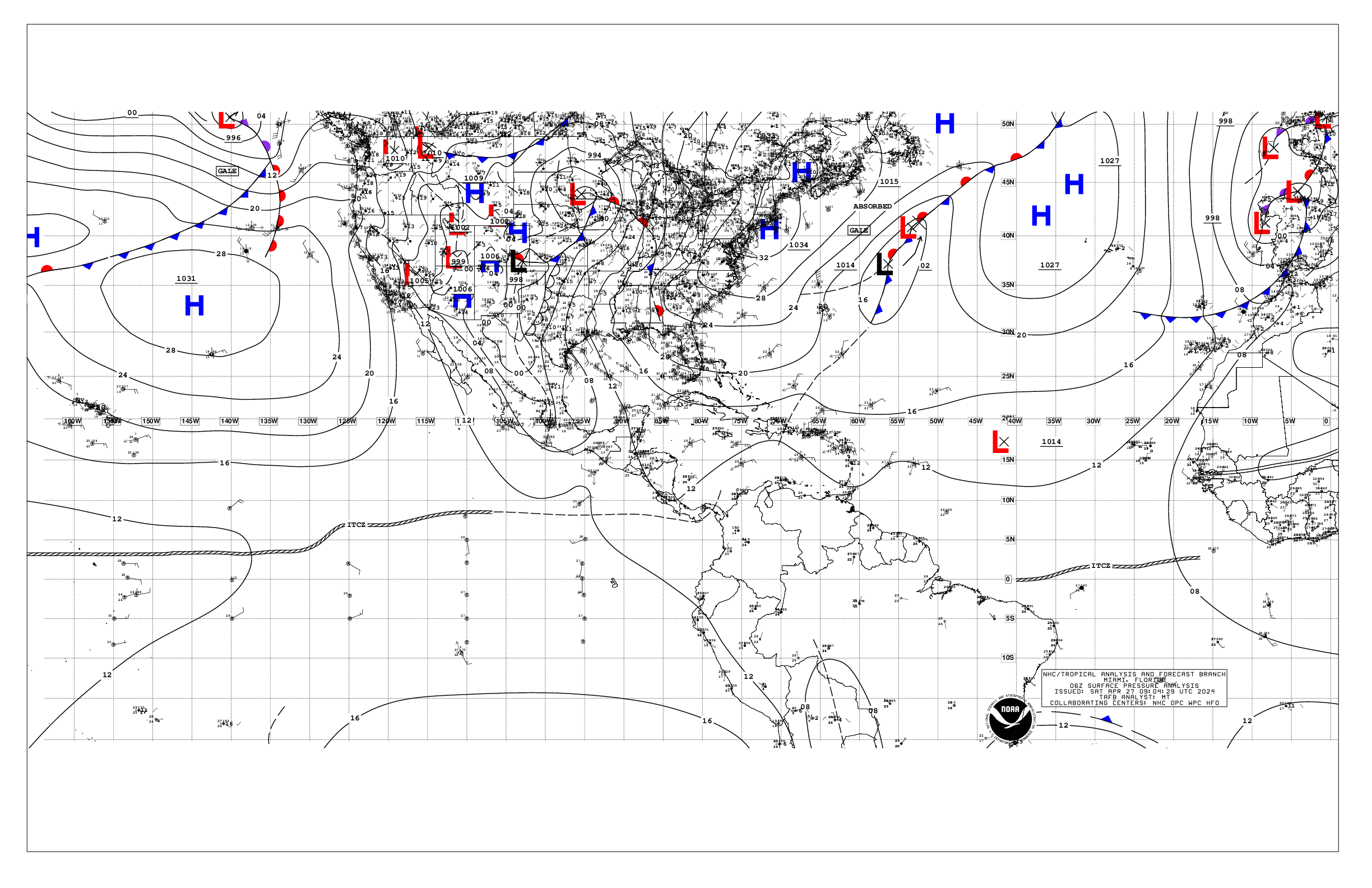
Based on 0600 UTC surface analysis and satellite imagery through
1040 UTC.

...SPECIAL FEATURES...

Tropical Storm Fay is centered near 25.0N 46.8W at 29/0900 UTC
or 1270 nm WSW of the Azores, moving SW at 11 kt. Estimated
minimum central pressure is 1008 mb. Maximum sustained wind
speed is 35 kt with gusts to 45 kt. Seas to 11 ft are within 75
nm in the NW quadrant. Fay is a sheared storm with numerous
moderate to strong convection occurring from 22N to 25N between
43W and 47W. A general SW to W-SW motion is anticipated over the
next several days. Some weakening is expected during the next day
or so, and Fay is forecast to become a post-tropical cyclone
within 36 h.

Please read the latest HIGH SEAS FORECAST issued by the National
Hurricane Center at website
- https://www.nhc.noaa.gov/text/MIAHSFAT2.shtml and the latest
Fay NHC Forecast/Advisory and Public Advisory at
www.hurricanes.gov for more details.

...TROPICAL WAVES...

A tropical wave is in the W Caribbean with axis near 77W, south
of 18N into northwestern Colombia, moving west at 10 kt. Numerous
moderate to strong convection is ahead of the wave from 14N to
18N between 77W and 82W, while scattered moderate convection is
found elsewhere S of 19N between 74W and 84W.

...MONSOON TROUGH/ITCZ...

The monsoon trough extends from 20N17W to 21N25W to 07N37W. The
ITCZ extends from 07N39W to 08N50W to the coast of Venezuela near
09N61W. Scattered moderate convection is noted from 04N to 15N
between 20W and 40W.

...GULF OF AMERICA...

Scattered heavy showers and tstms are ahead of a weak stationary
front that extends from Apalachicola, FL SW to SE Louisiana. High
pressure over northern Mexico against lower pressure across the
Gulf is supporting gentle to moderate SE winds over the western
half of the basin, and light to gentle winds along with slight to
moderate elsewhere.

For the forecast, the stationary front over the NE Gulf will
dissipate late today. Expect moderate to fresh winds and
building seas over mostly the western Gulf by tonight, as high
pressure shifts eastward ahead of a cold front moving through the
Southern Plains. Looking ahead, winds and seas will diminish late
in the week as the front approaches the NW Gulf Fri and Sat.

...CARIBBEAN SEA...

Deep layer troughing extending from the E Gulf of America
southward across the Yucatan Peninsula and extreme western
Caribbean is supporting scattered clusters of moderate isolated
strong convection across the W basin. Weak high pressure across
the western Atlantic has drifted southward to near 27N58W, and
tightened the pressure gradient modestly. This is leading to
moderate trades across the E Caribbean, and moderate to fresh
winds over the central basin, including offshore NW Colombia.
In the Gulf of Honduras, moderate to fresh SE winds and moderate
seas are ongoing.

For the forecast, moderate to fresh easterly winds and moderate
seas are forecast for the NW and central Caribbean through Sat
night as high pressure builds north of the area. Mainly moderate
trades are forecast for the eastern Caribbean.

...ATLANTIC OCEAN...

Please see the Special Features section above for information on
Tropical Storm Fay.

An upper-level trough and abundant low-level moisture continue to
fuel scattered heavy showers and tstms across across the offshores
between Bermuda and the Bahamas. A 1018 mb high is SE of Bermuda
near 27N58W, supporting moderate or weaker winds across the
region. Seas are generally moderate across the SW N Atlantic
waters. To the E, Tropical Storm Fay is near 25.0N 46.8W at 5 AM
EDT, and is moving southwest at 11 kt. Maximum sustained winds are
35 kt with gusts to 45 kt, and the minimum central pressure is
1008 mb. Otherwise, the remnants of Gonzalo are supporting gentle
to moderate winds NW of the Cape Verde Islands, and a cold front
extends from 31N24W to 28N42W. Moderate or weaker winds are
associated with these two features.

For the forecast west of 55W, scattered showers and a few
thunderstorms will persist across the Bahamas offshores as a
trough lingers in the region through midweek. High pressure SE of
Bermuda will continue to build over the western Atlantic and
support moderate to fresh E winds and 3-5 ft seas south of 25N Wed
through Fri.

$$
Ramos


 NHC on Facebook
 NHC on X
 NHC on YouTube
 NHC Blog: