000
AXNT20 KNHC 141005
TWDAT

Tropical Weather Discussion
NWS National Hurricane Center Miami FL
1215 UTC Tue Jul 14 2026

Tropical Weather Discussion for North America, Central America
Gulf of America, Caribbean Sea, northern sections of South
America, and Atlantic Ocean to the African coast from the
Equator to 31N. The following information is based on satellite
imagery, weather observations, radar and meteorological analysis.

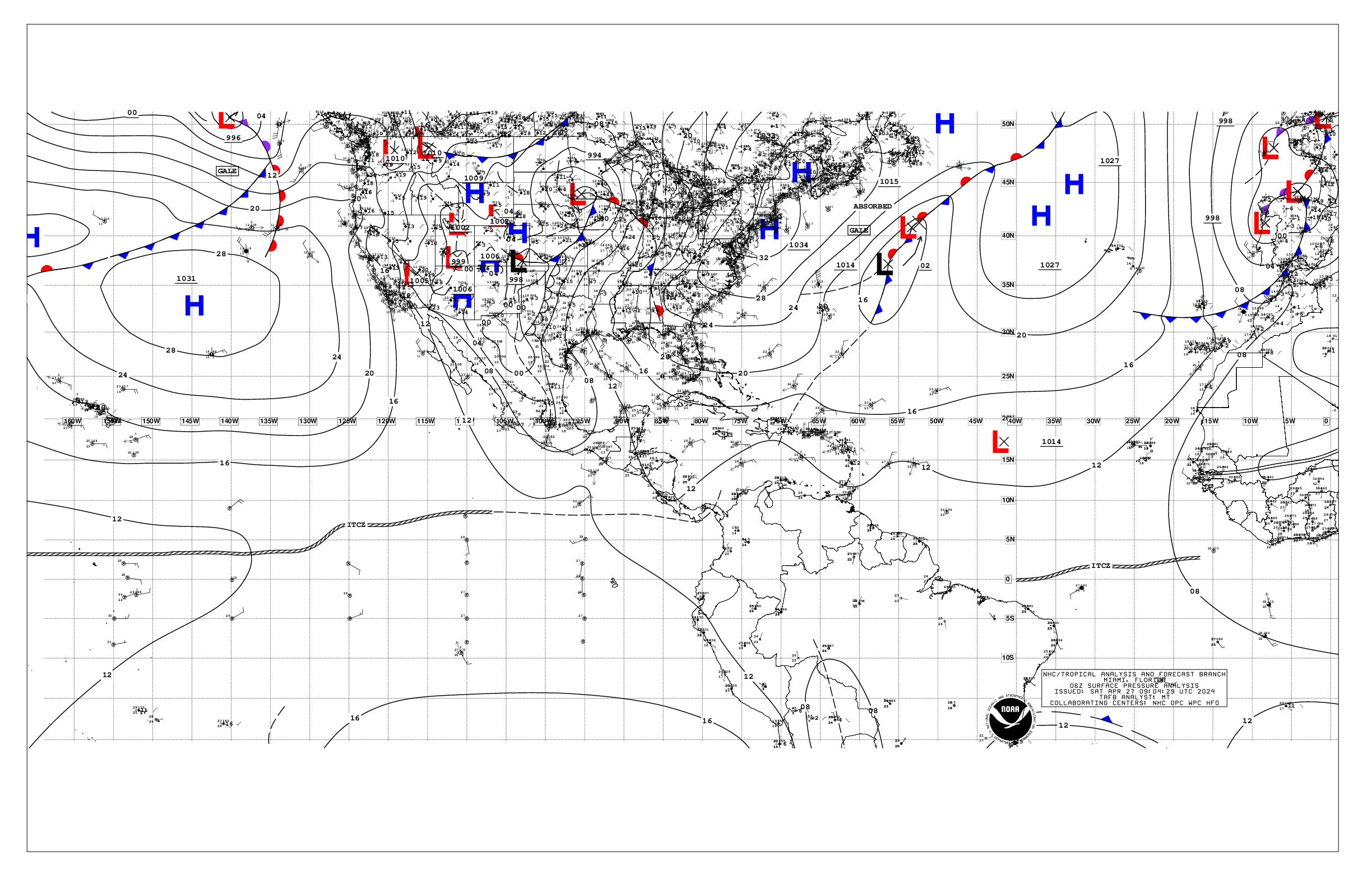
Based on 0600 UTC surface analysis and satellite imagery through
1000 UTC.

...TROPICAL WAVES...

A tropical wave is analyzed in the far eastern Atlantic along
19W, south of 18N, moving westward at 10-15 kt. Convection is
described in the Monsoon trough/ITCZ section below.

A western Caribbean tropical wave is along 88W, south of 19N,
moving westward at 15 kt. Scattered moderate to strong convection
is found south of 17N and west of 80W.

...MONSOON TROUGH/ITCZ...

The monsoon trough enters the Atlantic through the coast of
Senegal near 13N17W and continues southwestward to 06N40W. The
ITCZ extends from 06N40W to near 01N50W. Scattered moderate
convection is noted along the monsoon trough and E of 35W.

...GULF OF AMERICA...

A frontal boundary draped across the southern and southeastern
United States, along with diurnal heating and plenty of moisture
combine to support scattered showers and isolated thunderstorms
across much of the northern Gulf waters, especially north of 26N.
Generally dry conditions prevail elsewhere.

The Atlantic ridge extends across Florida and the northern Gulf
coast. This pattern is supporting moderate to fresh NE-E winds and
moderate seas off Yucatan and Bay of Campeche, east of 95W.
Moderate to fresh westerly winds and moderate seas are occurring
north of 29N. Elsewhere, moderate or lighter winds and slight seas
prevail.

For the forecast, a stationary front will prevail just N of the area
through midweek, enhancing thunderstorms across the northern Gulf
waters. Mariners can expect gusty winds, frequent lightning, and
locally higher seas near the stronger thunderstorms. Fresh to
strong easterly winds will pulse offshore the Yucatan Peninsula
each night. Elsewhere, gentle to moderate winds will prevail.

...CARIBBEAN SEA...

The pressure gradient between the persistent subtropical ridge
anchored north of the islands and lower pressures in northern
South America continue to support strong to near gale-force
easterly winds and rough seas in the south-central Caribbean.
Fresh to strong NE-E winds and moderate seas are occurring in the
Windward Passage and the Gulf of Honduras. Meanwhile, moderate to
fresh easterly winds and moderate seas are noted in the eastern
Caribbean. Elsewhere, moderate or weaker winds and slight to
moderate seas are prevalent.

For the forecast, strong to near-gale force trade winds will
persist across the central Caribbean through the week. East winds
will pulse fresh to locally strong each evening in the Gulf of
Honduras and Windward Passage.

...ATLANTIC OCEAN...

An extensive subtropical ridge dominates the tropical Atlantic,
supporting fresh easterly trade winds south of the SE Bahamas and
between 70W and 80W. Moderate easterly winds and moderate seas
are occurring south of 22N and west of 40W. Elsewhere, moderate or
lighter winds and moderate seas prevail. Convection is suppressed
across much of the basin due to a large plume of Saharan dust and
mid-latitude dry air.

For the forecast west of 55W, the aforementioned subtropical ridge
will support moderate to fresh trades south of 23N, with gentle
winds to the north. Pulsing strong winds are expected each night
offshore Hispaniola and in the Windward Passage.

$$
ERA


 NHC on Facebook
 NHC on X
 NHC on YouTube
 NHC Blog: