000
AXNT20 KNHC 280504
TWDAT

Tropical Weather Discussion
NWS National Hurricane Center Miami FL
0615 UTC Thu May 28 2026

Tropical Weather Discussion for North America, Central America
Gulf of America, Caribbean Sea, northern sections of South
America, and Atlantic Ocean to the African coast from the
Equator to 31N. The following information is based on satellite
imagery, weather observations, radar and meteorological analysis.

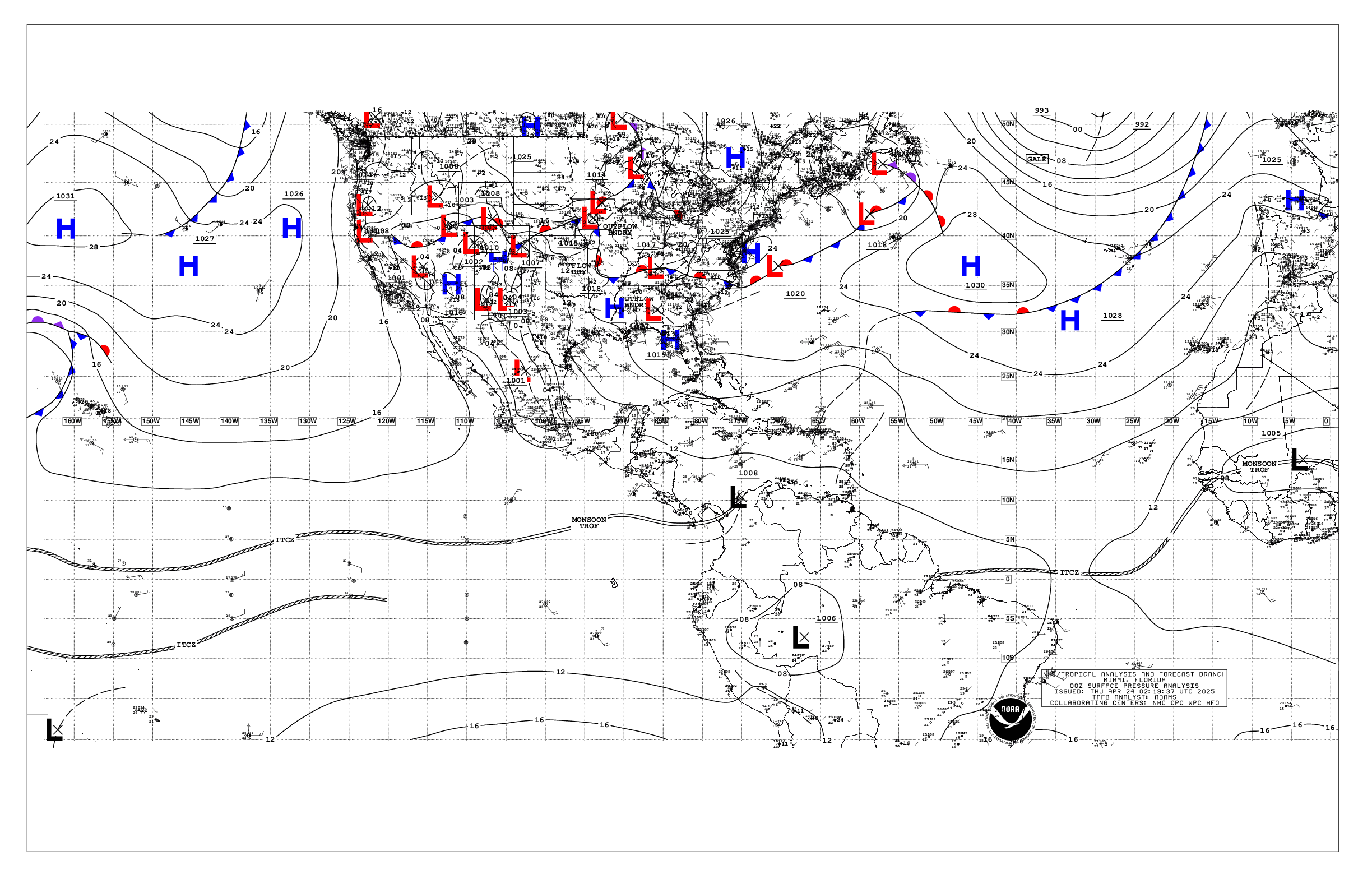
Based on 0000 UTC surface analysis and satellite imagery through
0500 UTC.

...TROPICAL WAVES...

An eastern Atlantic tropical wave has its axis along 39W from 00N
to 14N, moving westward at about 10 to 15 kt. Scattered showers
are noted along the wave axis from 05N-08N.

A central Atlantic tropical wave has its axis along 51W from 01N
to 12N, moving westward at 10 to 15 kt. Isolated showers and
thunderstorms are seen south of 06N between 49W and 51W.

A central Caribbean tropical wave has its axis along 77W south of
14N, moving westward at 10 to 15 kt. The convection noted with
this wave remains over Central America.

...MONSOON TROUGH/ITCZ...

The monsoon trough enters the Atlantic through the coast of
Guinea-Bissau near 16N17W and continues southwestward to 06N23W,
where it transitions to the ITCZ to 05N37W, then resumes near
06N41W to 03N49W. Scattered moderate convection is noted along the
ITCZ between 30W-36W.

...GULF OF AMERICA...

The upper-level flow pattern attributed to a robust upper-level
trough over the west-central Gulf. This pattern is drawing
abundant deep tropical moisture northward from the Caribbean and
into the central Gulf. A squall line moving quickly east-
southeastward across the NW Gulf waters is analyzed from 28N92W to
24N94W. Scattered to numerous showers and thunderstorms, some
strong, prevail over the western half of the basin. Fresh to
strong winds prevail NW of the squall line, while moderate to
fresh winds prevail elsewhere over the W Gulf. Elsewhere, the
pressure gradient related to the western extension of weak
Atlantic ridging is maintaining moderate or weaker winds. Seas are
of moderate state with these winds.

For the forecast, the Atlantic ridge extends westward across
north Florida and the northern Gulf coasts, and will sustain
moderate to fresh SE to S winds through Fri, then diminish to
gentle to moderate over the weekend. The exception will be evening
pulses of fresh to strong winds off the northern Yucatan this
evening and again Thu. The upper-level trough across the west-
central Gulf should continue to combine with abundant tropical
moisture to produce scattered showers and strong thunderstorms
over the central and eastern Gulf through Thu. Mariners are urged
to keep up to date with the latest forecasts.

...CARIBBEAN SEA...

The interaction between high pressure of 1021 mb centered over
the western Atlantic with relatively lower pressure to the south
over the Caribbean and in northern South America is bringing fresh
to near gale-force trades along with rough seas over the central
Caribbean. Moderate to fresh trades and mostly moderate seas are
present elsewhere. Scattered to numerous showers and
thunderstorms prevail over Central America.

For the forecast, the tight pressure gradient between 1021 mb
high pressure in the western Atlantic and a 1006 mb Colombian low
will continue to support fresh to strong trades and rough seas
across the central Caribbean through Thu morning before gradually
diminishing in areal coverage Thu evening through Fri. Winds are
expected to pulse to near-gale force off northwestern Colombia
tonight through Thu morning. Trades in the Gulf of Honduras and
just north of Jamaica will reach fresh to strong through early Thu
morning. The high pressure will shift east Thu night through the
weekend, leaving a weakened Atlantic ridge north of the Caribbean.
This will yield moderate to locally fresh winds and moderate seas
across most of the basin through the weekend, except the south-
central basin, where fresh to strong winds and rough seas will
remain.

...ATLANTIC OCEAN...

High pressure of 1021 mb is located near 29N68W, with a ridge
stretching westward across northern Florida and to the north-
central Gulf of America. To the east, a 1025 mb high center is
near 31N27W. A weak trough extends from near 30N54W to 25N58W. No
significant convection is occurring with these features. Another
trough is analyzed from 29N25W to 26N30W. High pressure is
present over the rest of the basin north of about 15N anchored by
the two previously mentioned high centers. Moderate to fresh
trades along with moderate to rough seas are south of 20N and
east of 35W, also south of about 25N and east of 35W, and south of
a line from northeast Florida to the northern Leeward Islands.
Elsewhere, light to gentle winds are noted. Seas with these winds
are of moderate state.

For the forecast west of 55W, the Atlantic ridge will continue to
support fresh to strong winds with moderate to rough seas south
of 24N and west of 65W through tonight, including the Great Bahama
Bank, as the high begins to shift eastward. The ridge will remain
in place, but weaken as this occurs, allowing winds and seas to
begin to diminish. Two cold fronts will sweep eastward across the
north Atlantic are expected to produce increasing winds and seas
north of 28N and east of 70W from Thu night through Fri evening,
then again from Sat night through Sun night.

$$
ERA


 NHC on Facebook
 NHC on X
 NHC on YouTube
 NHC Blog: