000
AXNT20 KNHC 231027
TWDAT

Tropical Weather Discussion
NWS National Hurricane Center Miami FL
1215 UTC Wed Sep 23 2026

Tropical Weather Discussion for North America, Central America
Gulf of America, Caribbean Sea, northern sections of South
America, and Atlantic Ocean to the African coast from the
Equator to 31N. The following information is based on satellite
imagery, weather observations, radar and meteorological analysis.

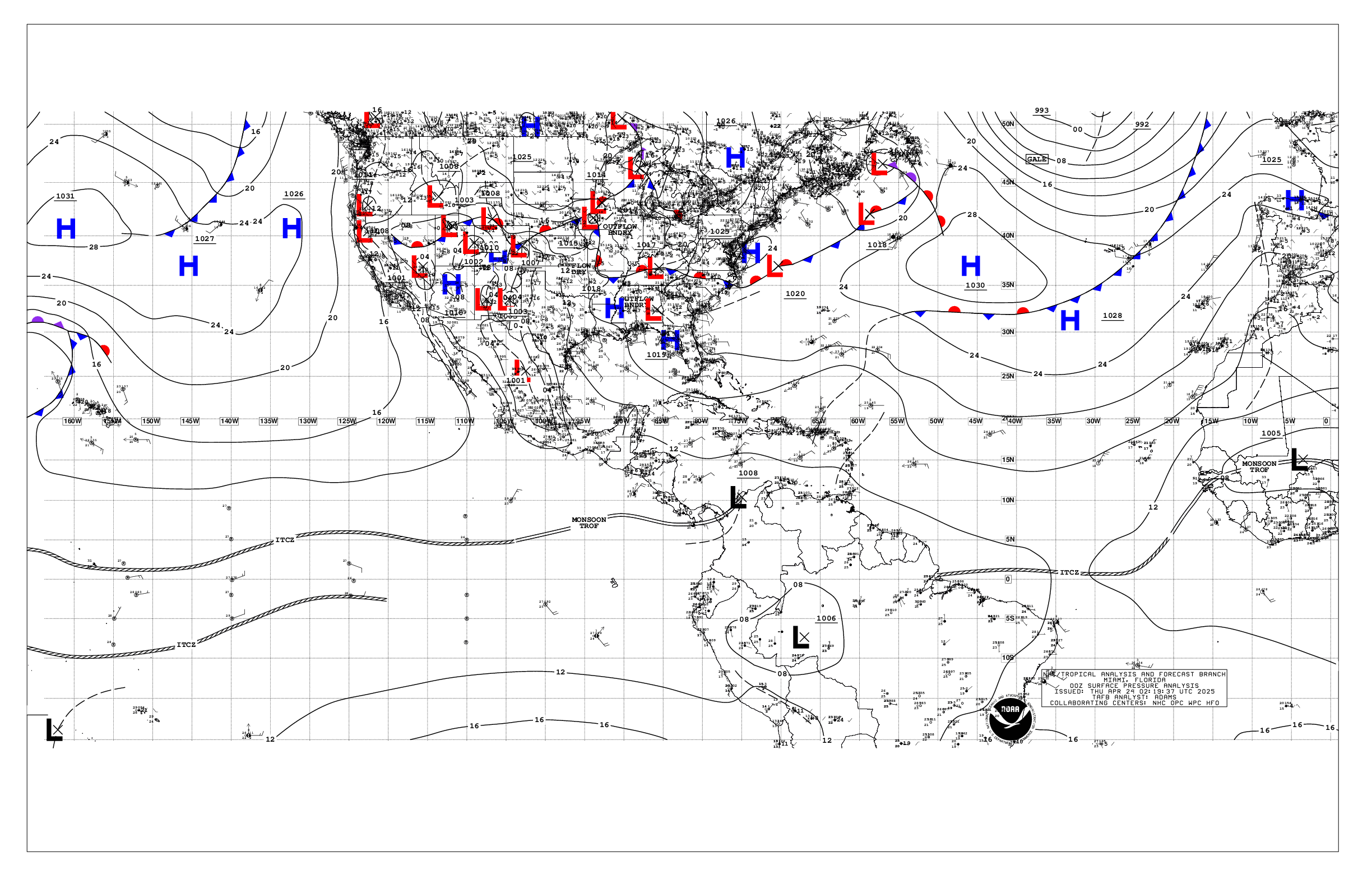
Based on 0000 UTC surface analysis and satellite imagery through
1000 UTC.

...SPECIAL FEATURES...

Heavy Rainfall in Central America, Jamaica, and Cuba: A mid to
upper-level trough currently extends from the eastern Gulf of
America across the Yucatan Peninsula and NW Caribbean, while
relatively warm sea surface temperatures and abundant low level
moisture are present. An elongated low level trough will prevail
across this area during the next several days, and aid in
funneling enhanced tropical moisture across Central America and
the western Caribbean, supporting periods of heavy rainfall
through Sat the 26th. There is still some uncertainty regarding
the exact location of heaviest rainfall, but for now heavy
rainfall looks likely across extreme southeastern Mexico near
Chiapas, southern and central Guatemala, western Honduras, El
Salvador, southern and eastern Belize, as well as across portions
of Costa Rica and Panama. Currently, heavy rainfall is ongoing
from the NW coastal waters of Jamaica, westward across the Cayman
Islands to 83W and then northward across east-central Cuba to
Andros Island in the Bahamas. Scattered moderate convection are
elsewhere across the Gulf of Honduras, and the remainder of the
Bahamas. Heavy rainfall in these regions will create the
possibility of life-threatening flash flooding and landslides.
Please refer to local weather services as well as the
International Desk at the Weather Prediction Center for more
information.

...TROPICAL WAVES...

An Atlantic tropical wave is analyzed along 43W, S of 15N, moving
westward at 15 kt. Scattered moderate convection is from 09N to
12N between 41W and 45W.

An Atlantic tropical wave has its axis along 59W south of 16N,
moving westward at 10 to 15 kt. No significant convection is noted
at this time.

...MONSOON TROUGH/ITCZ...

The monsoon trough exits Africa along the Guinea coast near
11N15W and extends southwestward to 09N44W, where it transitions
to the ITCZ and continues to 09N59W. Scattered to numerous
moderate to strong convection is noted from 05N to 11N E of 25W
to the coast of Africa.

...GULF OF AMERICA...

A weak pressure gradient remains across the Gulf basin as
weakening high pressure across the SE U.S. extends a ridge across
the northern Gulf. A broad and persistent middle to upper-level
trough over the eastern Gulf is supporting very active
thunderstorms over portions of the NW Caribbean and across eastern
Cuba into the Bahamas, while convection across the Gulf has
diminished in recent hours, with widely scattered moderate
convection across the Straits of Florida and into the SW Florida
waters across the Fort Meyers area. A weak surface trough lingers
from central Florida into the the SW Gulf to the western Straits
of Florida. The current surface pattern is generally producing
light to gentle easterly winds and slight seas across the Gulf.
Moderate E-NE winds and seas to 3 ft are occurring well offshore
of southern Texas between 93W and 95W.

For the forecast, the current weak pressure pattern across the
Gulf will continue to generate gentle to moderate winds across
the Gulf through Thu. The persistent middle to upper-level trough
will support scattered showers and thunderstorms over the SE Gulf
and the Straits of Florida for at least the next couple of days.
A cold front is forecast to move into the NE Gulf Thu night and
Fri. The front will shift southward accompanied by increasing
winds and seas, before stalling over the SE Gulf this weekend.

...CARIBBEAN SEA...

Please refer to the Special Features section above for information
on impactful weather across the northwestern Caribbean.

Outside of the active convection across the NW Caribbean, fair
weather dominates most of the basin. Scattered showers accompany a
low-level trough moving across the Leeward Islands. At the
surface, a weak pressure pattern prevails across the basin.
Moderate trades prevail across most of the basin E of 76W, where
seas are 3 to 5 ft, while fresh to strong winds are S of 14N to
the coasts of NW Venezuela and extreme NE Colombia, where seas are
5 to 7 ft. Outside of convection, light to gentle winds and
slight seas prevail across the remaining waters of the western
Caribbean.

For the forecast, a weak pressure gradient will continue across
the basin to produce moderate to fresh trades over the S central
Caribbean, and gentle to moderate winds elsewhere. A deep layered
upper trough over NW portions will support scattered to numerous
showers and thunderstorms over the W Caribbean for at least the
next couple of days.

...ATLANTIC OCEAN...

Of note: What was previously Tropical Depression Fay is now a
post-tropical remnant low pressure of 1013 mb centered near
30.5N37.0W. Winds of 20-30 kt continue within 180 nm across the N
semicircle, where buoy observations suggest seas are 8 to 13 ft.
Scattered moderate convection has increased in recent hours, and
within 90 nm across the E semicircle of the low.

Scattered showers and thunderstorms remain active across the
NW Caribbean, across eastern Cuba and over much of the Bahamas and
adjacent Atlantic waters S of 28N and W of 67W. This activity is
occurring due to the combination of ample moisture across the area
and unstable conditions created by the persistent and deep
layered upper trough across the eastern Gulf of America and NW
Caribbean. Another upper-level low is drifting westward near
26N51W. This feature is interacting with several surface troughs
in the central Atlantic resulting in an area of scattered moderate
convection from 22.5N to 28N between 41W and 53W. Another surface
trough is moving westward across the Lesser Antilles, and
producing scattered showers and a few thunderstorms across the
Leeward Islands and adjacent Atlantic waters W of 59W. Outside of
this convection, a weak pressure gradient continues across much
of the Atlantic. This pattern is sustaining mostly gentle to
moderate trades S of 23N and variable light to gentle winds
elsewhere W of 50W, except for moderate SE to S winds over the
area N of 25N between 58W and 70W. Seas are 4 ft or less across
this area except 5 to 8 ft N of 26N between 49W and 52W.

Elsewhere, the Azores high is centered across the NE Atlantic
along 20W and extends a ridge southwestward and drapes across the
remnant low of Fay. The resultant pressure gradient is yielding
moderate N to NE winds from the Canary Islands to the Cabo Verdes,
with strong winds along the coast of Africa. Seas there are 3 to
6 ft. Moderate NE trades prevail S of 21N between the Cabo Verdes
and 50W, where seas are 4 to 6 ft. N of this area winds are light
to gentle. However, long period N to NE swell has moved into the
waters N of 25N and E of 52W, where seas are 6 to 8 ft.

For the forecast west of 55W, a continued weak pressure gradient
will support gentle to moderate trades across forecast waters
through Wed night. The upper-level trough will support scattered
showers and thunderstorms west of 65W for the next couple of days.
A cold front will move off the SE United States coast late Wed
night. The front will shift eastward, reaching from near Bermuda
to the straits of Florida Sat night before starting to weaken.
Fresh to strong winds and increasing seas in large NE swell will
follow the front on Thu and Fri.

$$
ERA


 NHC on Facebook
 NHC on X
 NHC on YouTube
 NHC Blog: