000
AXNT20 KNHC 270435
TWDAT

Tropical Weather Discussion
NWS National Hurricane Center Miami FL
0615 UTC Tue Oct 27 2026

Tropical Weather Discussion for North America, Central America
Gulf of America, Caribbean Sea, northern sections of South
America, and Atlantic Ocean to the African coast from the
Equator to 31N. The following information is based on satellite
imagery, weather observations, radar and meteorological analysis.

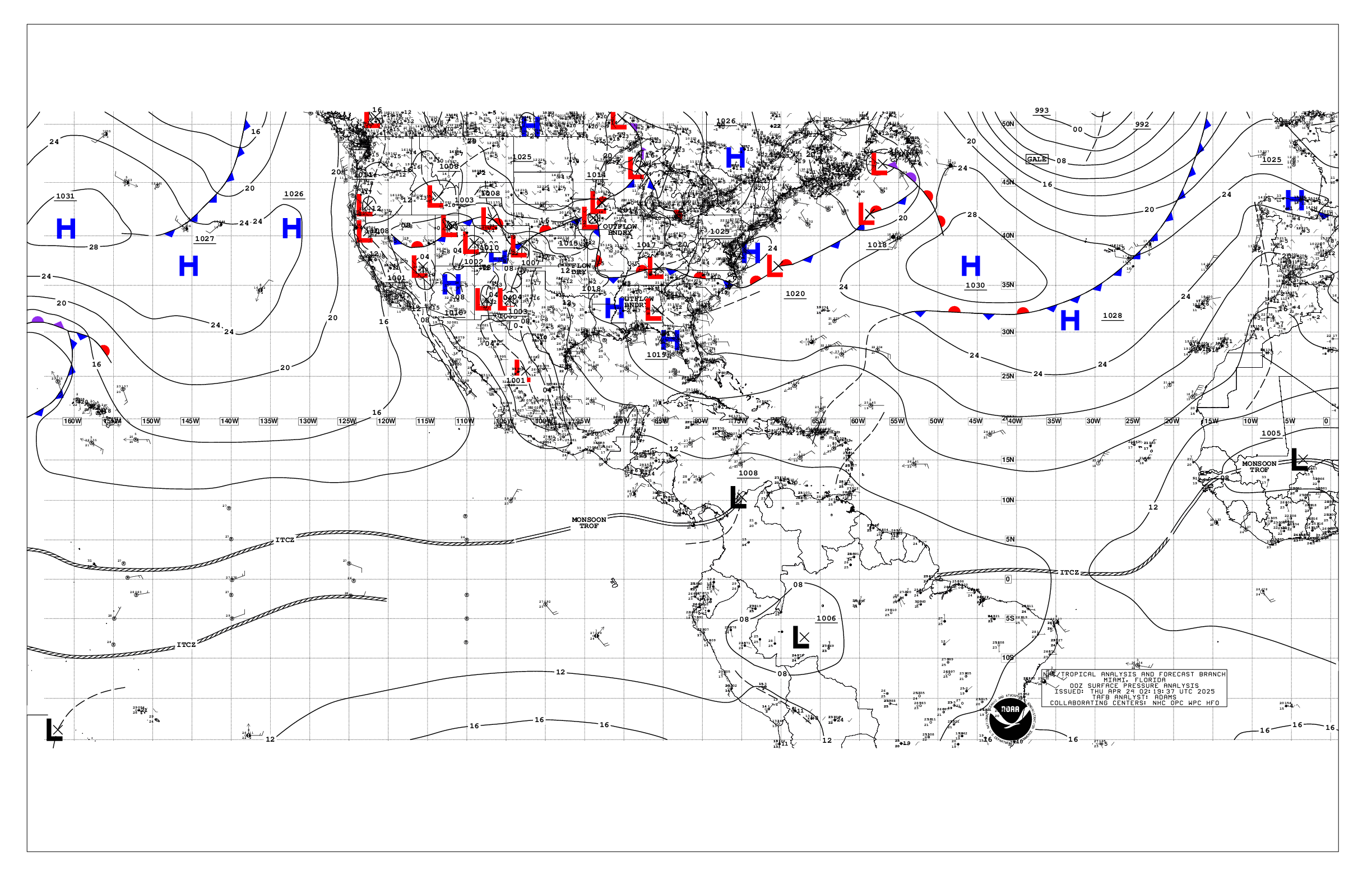
Based on 0000 UTC surface analysis and satellite imagery through
0400 UTC.

...SPECIAL FEATURES...

Heavy Rainfall in the Northern Caribbean: Deep-layer troughing
extending southward through the Bahamas into the northern Caribbean
combined with abundant tropical moisture will support periods of
heavy rainfall over Hispaniola, the southern Bahamas, and the
Turks and Caicos Islands through tonight. The trough will
gradually shift north through Wed while weakening. Very heavy
rainfall will bring a potential for dangerous and life-
threatening flash flooding, particularly over portions Haiti and
the Dominican Republic. Please refer to your local weather
services and the International Desk at the Weather Prediction
Center for more information.

NW Atlantic Significant Swell: A tight pressure gradient between
a 1028 mb high pressure centered over the eastern United States
and a stationary front extended from SE of Bermuda to the Bahamas
is supporting widespread strong to near gale-force NE winds NW of
the front, along with very rough seas of up to 18 ft. These very
rough seas extend south to 25N and E to 67W. The front will remain
generally stationary, and only gradually weaken through Wed as the
high pressure slides eastward. This will keep strong winds and
very rough seas in place through at least Wed. Mariners are
urged to remain alert to these dangerous marine conditions and
take the necessary precautions to avoid these affected areas.
Please, see the latest NWS High Seas Forecast issued by the
National Hurricane Center at website
https:www.nhc.noaa.gov/text/MIAHSFAT2.shtml for further details.

...MONSOON TROUGH/ITCZ...

The monsoon trough axis enters the Atlantic near 14N16W and
extends southwestward to 06N30W, where it transitions to the ITCZ
and continues 08N43W and to 10N58W. Scattered moderate convection
is noted from 04N to 09N E of 30W.

...GULF OF AMERICA...

The pressure gradient between a 1028 mb high center over the
eastern United States lower pressure in the Caribbean is
supporting fresh to strong NE winds and rough seas over the
eastern Gulf, including the Florida Straits. Mainly moderate winds
and seas prevail elsewhere.

For the forecast, the weather pattern will persist into midweek,
followed by diminishing winds and seas into the upcoming weekend.
Elsewhere, gentle to moderate winds and moderate seas will prevail
during much of the workweek.

...CARIBBEAN SEA...

See Special Features section above for information on heavy
rainfall over Hispaniola.


A deep-layer trough extending from eastern Cuba southward to near
15N75W continues to support scattered moderate convection mainly
offshore Hispaniola and Puerto Rico. Moderate to locally fresh N
winds and moderate to locally rough seas are noted in the NW basin
W of 85W, with moderate trades and seas in the eastern basin.
Elsewhere, gentle winds and slight seas prevail. The eastern
extension of the East Pacific monsoon trough is inducing scattered
moderate convection offshore Colombia.

For the forecast, the upper level trough will drift eastward
through mid- week, keeping the chance of showers and thunderstorms
over Hispaniola and Puerto Rico. Meanwhile, a surface trough over
the central Caribbean will drift westward over the next few days.
High pressure across the eastern U.S. will continue to build
southward across Florida and the Gulf of America through midweek,
leading to moderate to fresh N to NE winds and moderate seas
across the western Caribbean W of the trough through Tue night.
Seas of up to 8 ft in N to NE will continue to propagate across
the Yucatan Channel through Tue. Otherwise, moderate to fresh E to
SE winds in the E Caribbean will diminish to gentle to moderate
speeds by tonight.

...ATLANTIC OCEAN...

See Special Features section above for information on heavy
rainfall over Hispaniola, the southern Bahamas, and the Turks and
Caicos Islands and for Significant Swell causing very rough seas
N of the Bahamas extending eastward to near Bermuda.

South of the front and significant swell, mainly moderate S winds
and rough seas prevail E to 55W. Another front has stalled further
east, from 31N30W to 28N42W to 31N51W. Rough seas are N of this
boundary, but winds on either side of it are moderate or weaker.
The remainder of the basin is under broad high pressure that
supports moderate to locally fresh trades winds south of about
24N. Seas of 5 to 7 ft are over these waters. Gentle winds and
mostly moderate seas are elsewhere N of 24N.

For the forecast west of 55W, the portion of a currently
stationary front east of 60W is expected to move southeastward as
a cold front through Thu while a stationary front will persist
over the waters N of 27N and W of 60W. A high pressure center will
remain over the SE of the United States during this time. The
frequent gusts to gale- force will diminish by tonight, however,
fresh to strong winds and rough to very rough seas in NE swell
will persist to the north of the front through Wed while gradually
diminishing.

$$
Konarik


 NHC on Facebook
 NHC on X
 NHC on YouTube
 NHC Blog: