000
AXNT20 KNHC 272040
TWDAT

Tropical Weather Discussion
NWS National Hurricane Center Miami FL
0015 UTC Tue Apr 28 2026

Tropical Weather Discussion for North America, Central America
Gulf of America, Caribbean Sea, northern sections of South
America, and Atlantic Ocean to the African coast from the
Equator to 31N. The following information is based on satellite
imagery, weather observations, radar and meteorological analysis.

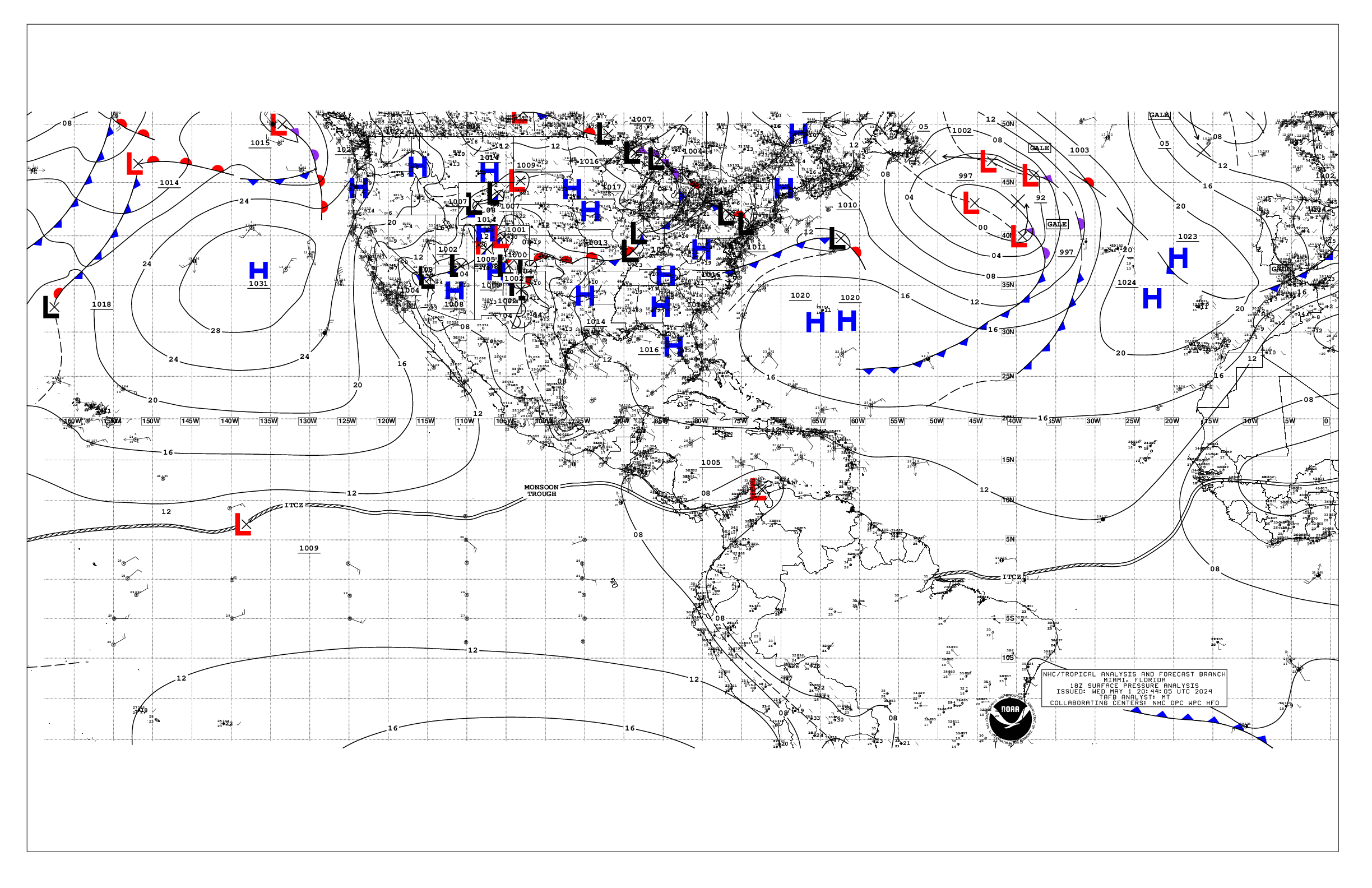
Based on 1800 UTC surface analysis and satellite imagery through
2000 UTC.

...MONSOON TROUGH/ITCZ...

The monsoon trough enters the Atlantic near 11N15W to near
00N26W. The ITCZ continues from that point to the coast of Brazil
near 04S38W. Scattered moderate convection is noted withing 240 nm
on either side of the boundaries.

...GULF OF AMERICA...

A relatively weak pressure gradient prevails across the basin.
With this, moderate to fresh E winds prevail west of 88W along
with 3-5 ft seas, with gentle to moderate mainly E to SE winds and
1-2 ft seas east of 88W. A portion of a stationary front pokes in
across the NE Gulf coastal waters with little impacts.

For the forecast, the pressure gradient between weak high
pressure over the eastern Gulf and a trough that extends along the
coast of Mexico from Tampico to Veracruz will produce moderate to
fresh southeast winds and moderate seas over the western half of
the Gulf, and gentle to moderate winds with slight to moderate
seas over the eastern part of the basin through early Wed.
Elsewhere, a diurnal trough will pulse moderate to fresh winds off
the Yucatan Peninsula during the evenings through Fri night. A
cold front will enter the northern Gulf Wed night into Thu and
reach from South Florida to central Texas by late Fri.

...CARIBBEAN SEA...

Broad upper-level trough is supporting scattered showers across
most of the central and eastern Caribbean. A weak pressure across
the basin is keeping moderate to locally fresh trades south of 15N
and east of 76W, as well as in the Gulf of Honduras. Winds are
mainly light to gentle across the remainder of the basin. Slight
seas prevail between 68W and 85W, and moderate elsewhere.

For the forecast, high pressure will build north of the area,
tightening the pressure gradient. The tighter pressure gradient
will support moderate to fresh wind speeds over the eastern and
central Caribbean tonight through Thu, reaching locally strong at
times. In the Gulf of Honduras, moderate to fresh east winds and
moderate seas are expected through Fri, increasing to fresh to
strong speeds through Sat.

...ATLANTIC OCEAN...

A 1017 mb low pres is analyzed near 30N34W, with cold front from
the low to 24N45W. A surface trough continues from that point to
25N67W. Scattered showers are noted along these features. Seas to
8 ft in long-period northwest swell follow the front/trough. To
the west, a cold front moved off the southeastern United States
and is analyzed in our area from 31N72W to near Cape Canaveral,
Florida. Scattered showers and thunderstorms are noted ahead of
the front. Fresh to strong northeast winds are behind the front
along with seas of 7-10 ft.

Otherwise, high pressure is the main feature over the eastern
part of the basin. The related gradient is keeping moderate to
fresh trades over most of the basin south of about 20N, with
similar winds north of 27N between 55W and 65W ahead of the
western front. Seas with these winds are mainly 5-7 ft. Moderate
or weaker winds prevail elsewhere, with seas of 4-6 ft.

For the forecast west of 55W, a frontal boundary extending from
31N72W to central Florida will reach from near 31N59W to 25N64W
and weakening to the central Bahamas late Tue before shifting east
of 55W early on Wed. Moderate to fresh northerly winds, and
moderate to rough seas are expected north of 27N in the wake of
the front tonight. Another cold front is expected to move offshore
northeast Florida late Thu or Thu night, and weaken as it reaches
from near Bermuda to 28N72W and stationary to South Florida late
Fri.

$$
Lewitsky


 NHC on Facebook
 NHC on X
 NHC on YouTube
 NHC Blog: