000
AXNT20 KNHC 230831
TWDAT

Tropical Weather Discussion
NWS National Hurricane Center Miami FL
1215 UTC Thu Apr 23 2026

Tropical Weather Discussion for North America, Central America
Gulf of America, Caribbean Sea, northern sections of South
America, and Atlantic Ocean to the African coast from the
Equator to 31N. The following information is based on satellite
imagery, weather observations, radar and meteorological analysis.

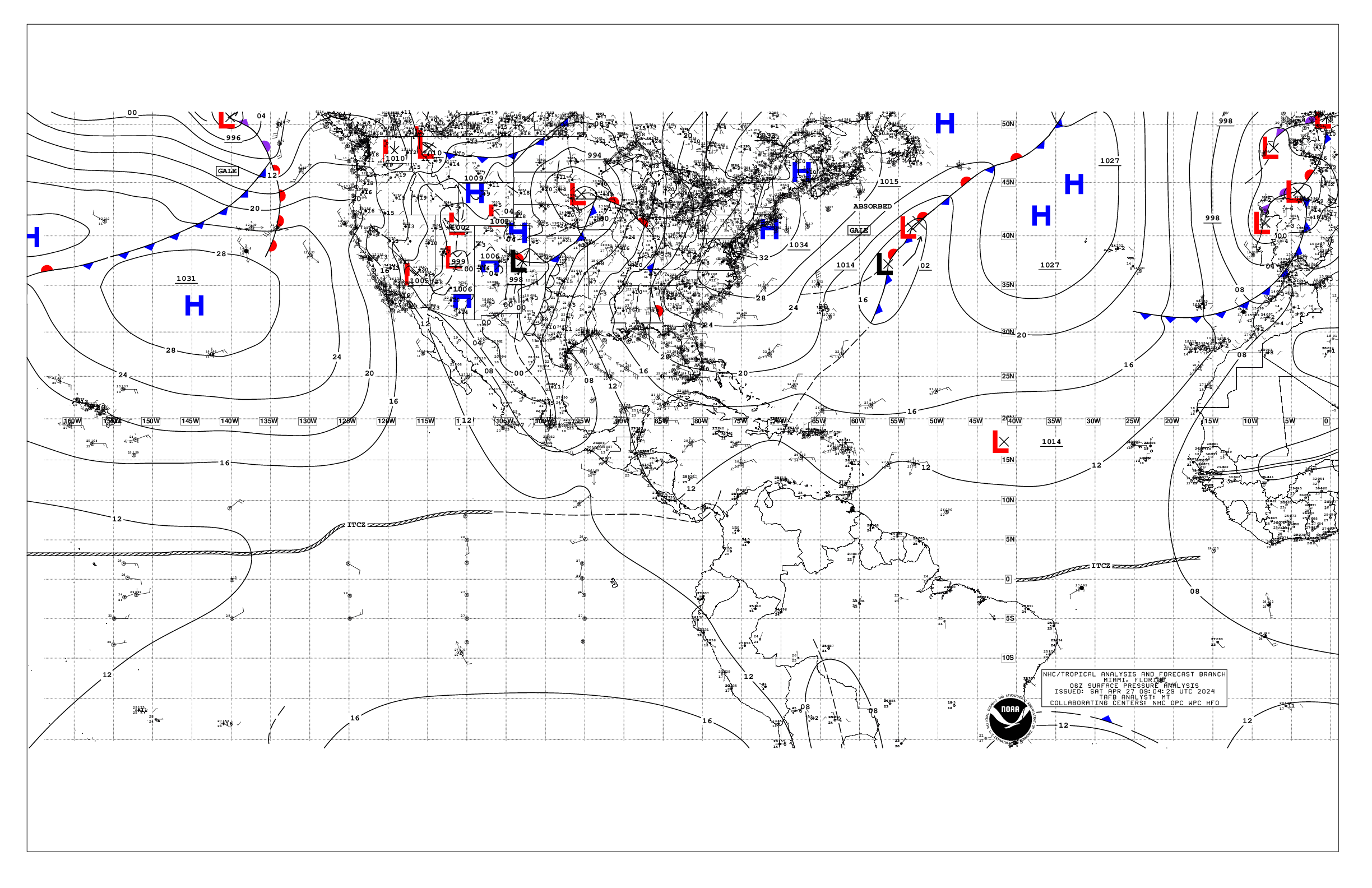
Based on 0600 UTC surface analysis and satellite imagery through
0830 UTC.

...MONSOON TROUGH/ITCZ...

The monsoon trough enters the Atlantic near 11N15W and extends
southwestward to 01N30W. The ITCZ extends from 01N30W to 01N50W.
Numerous moderate to scattered strong convection is observed south
of the monsoon trough and east of 30W.

...GULF OF AMERICA...

A weak pressure gradient across the area is supporting gentle to
moderate winds across the gulf waters. With these winds, seas are
in the 3-6 ft range.

For the forecast, high pressure will prevail across the Gulf
region, with a relatively weak pressure gradient across the area.
This will result in gentle to moderate SE winds and moderate seas
basin-wide through. The exception will be off the Yucatan
Peninsula, where a diurnal trough will pulse moderate winds to
fresh during the evenings.

...CARIBBEAN SEA...

Fresh to locally strong winds, and seas of 4-6 ft, are over the
Windward passage and in the lee of Cuba. Moderate to fresh winds,
and seas of 4-5 ft, are found off the coast of Colombia.
Elsewhere, gentle to moderate winds, and seas of 2-3 ft prevail.

For the forecast, high pressure located N of the basin will
weaken over the next couple of days and support a weaker than
usual pressure gradient across the Caribbean Sea into the weekend.
This will result in mainly gentle to moderate winds and slight to
moderate seas across the entire basin Fri through Sun.

...ATLANTIC OCEAN...

A cold front extends from near 31N48W to 24N56W, then stationary
to eastern Cuba. Moderate to fresh winds, locally strong, are
within 300 nm west of the front, with seas in the 6-9 ft range.
Elsewhere W of the front, light to gentle winds, and seas of 3-6
ft prevail. High pressure dominates the remainder of the
discussion waters, anchored by a 1019 mb high centered near
26N32W. Light to gentle winds are in the vicinity of the high
center, with gentle to moderate winds elsewhere. Northerly swell
is bringing rough seas of 8-10 ft to the waters N of 27N between
18W and 35W. Seas of 4-7 ft prevail elsewhere.

For the forecast west of 55W, conditions will gradually improve
late this week as the front weakens and eventually stalls over the
SE waters. High pressure in the wake of the front will weaken
over the next couple of days, bringing a gentle to moderate
anticyclonic flow with slight to moderate seas through the
weekend. The exception will be over the NE waters where fresh
westerly winds and rough seas are expected beginning on Fri as
another cold front reaches the area by Sat.

$$
AL


 NHC on Facebook
 NHC on X
 NHC on YouTube
 NHC Blog: