000
AXPZ20 KNHC 140845
TWDEP
Tropical Weather Discussion
NWS National Hurricane Center Miami FL
1005 UTC Thu May 14 2026
Tropical Weather Discussion for the eastern Pacific Ocean from
03.4S to 30N, east of 120W including the Gulf of California, and
from the Equator to 30N, between 120W and 140W. The following
information is based on satellite imagery, weather observations,
radar, and meteorological analysis.
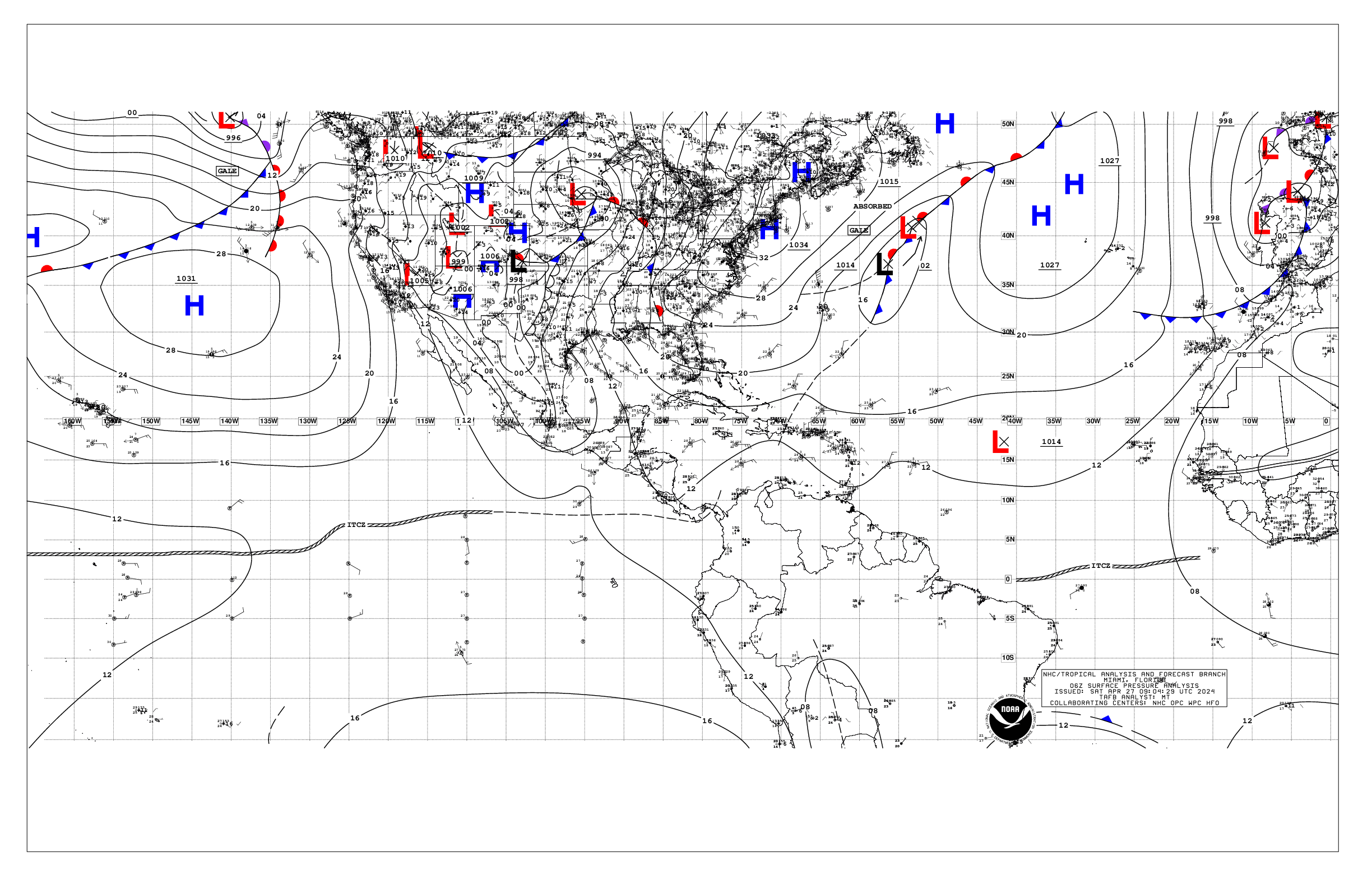
Based on 0600 UTC surface analysis and satellite imagery through
0800 UTC.
...INTERTROPICAL CONVERGENCE ZONE/MONSOON TROUGH...
The monsoon trough axis extends from 10.5N74W to 08N78W to
09.5N86W to 04.5N97W. The ITCZ extends from 06N101W to 06N127W,
then resumes W of a surface trough from 04N133W to beyond
08N140W. Scattered moderate to strong convection is noted from
02.5N to 09N E of 101W, from 08.5N to 11.5N between 102W and
110W. Scattered to locally numerous moderate to strong
convection is noted from 00N to 10.5N between 119W and 139W.
...OFFSHORE WATERS WITHIN 250 NM OF MEXICO...
A broad ridge across the region extends southeastward across the
waters W of 110W, to the Revillagigedo Islands. Troughing
extends across western Mexico. Recent satellite scatterometer
winds show that this pressure pattern is supporting moderate to
locally fresh NW to N winds offshore Baja California north of
Cabo San Lazaro, and gentle to moderate winds elsewhere across
the Baja waters. Seas across these Baja waters are 5 to 7 ft in
mixed NW and SW swell. Scatterometer data also showed moderate to
locally fresh W to SW gap winds across the northern Gulf of
California, and gentle to moderate NW winds across the remainder
of the Gulf. Seas are 2 to 4 ft and building across the northern
Gulf and 2 to 3 ft elsewhere. Gentle to moderate winds prevail
elsewhere from Baja Sur to Puerto Angel, where seas are 5 to 6 ft
in SW swell. N to NE gap winds have begun to pulse to near 30 kt
across the Gulf of Tehuantepec and extend offshore to near 14N,
where seas are 6 to 9 ft.
For the forecast, strong northerly gap winds will continue to
pulse across the Gulf of Tehuantepec through early Fri due to
high pressure across NE Mexico and the western Gulf of America.
Seas will peak around 10 ft with these peak winds. Fresh W to SW
gap winds will pulse in the northern Gulf of California tonight
through Thu morning as a trough briefly deepens, with similar
conditions expected again each night through Sun night. Otherwise,
moderate to fresh NW winds are expected across the offshore
waters of Baja California through Fri as high pressure well to
the NW gradually builds into the area. Winds will increase to
fresh to strong well offshore Baja California Norte this weekend,
and mostly fresh across the remaining Baja waters, then diminish
Mon. Moderate seas in mixed SW and NW swell will dominate the
offshore waters today, gradually building to 8-9 ft offshore
Baja California Norte early Fri night, then to 9-15 ft early Sun
through midday Mon. Seas of 8 ft or greater are expected to
spread southward to the Revillagigedo Islands by early Tue.
....OFFSHORE WATERS WITHIN 250 NM OF CENTRAL AMERICA, COLOMBIA, AND
WITHIN 750 NM OF ECUADOR...
Recent satellite scatterometer data showed fresh to locally
strong easterly gap winds extend offshore of southern Nicaragua
and the Papagayo region to 88W. Seas are 6-7 ft there. Moderate
to locally fresh NW to N winds prevail across the Gulf of
Panama and extends southward to Punta Mala, where seas are 3 to
4 ft. Light to gentle winds prevail elsewhere across the area
waters, with seas of 4-6 ft in SW swell, except 5-7 ft in mixed
southerly swell S of the Equator. Numerous strong thunderstorms
are shifting westward off the coast of Colombia and into the
approach to the Gulf of Panama, while scattered showers and
thunderstorms extend from 02.5N northward into the coastal waters
of western Panama and southeastern Cost Rica.
For the forecast, fresh gap winds will pulse to locally strong
offshore of the Papagayo region through the rest of the week,
mainly at night into the early morning hours, with building seas
to locally rough during those times. Elsewhere, gentle to
moderate winds and moderate seas in southerly swell are expected
through the remainder of the week and into the upcoming weekend.
Moderate to locally fresh N to NE winds will pulse across the
Gulf of Panama to the Azuero Peninsula at night. Showers and
thunderstorms across the coastal waters of Colombia, Panama and
Costa Rica will gradually shift westward and diminish across the
area through Thu, then develop again each evening through night
through Sat.
...REMAINDER OF THE AREA...
1030 mb high pressure just N of the area near 38N139W extends a
ridge southeastward to the Revillagigedo Islands, and dominates
the waters N of the ITCZ. The pressure gradient between the
ridging and lower pressure associated with the ITCZ, including an
embedded surface trough from 12N122W to 04N131W, supports
moderate to fresh NE to E trades across most of the waters N of
the ITCZ and W of 120W. Gentle to moderate winds are elsewhere
across the open waters, including S of the ITCZ. Seas are 6-8 ft
in southerly swell S of 05N between 100W and 125W. Seas are 7-9
ft in mixed swells from roughly 10N to 27N to the W of 128W, and
from 05N to 21N between 119W and 130W. Active convection
continues between 120W and 135W, near portions of the ITCZ and
the surface trough as described above.
For the forecast, high pressure NW of the area will continue to
build east and southeastward across the region tonight through
Sun, then shift W and weaken early next week. This pattern will
support continued fresh trade winds N of the ITCZ and W of 120W,
with seas of 8-9 ft mainly W of 125W, and 6-7 ft between 118W
and 125W. N winds are expected to strengthen slightly to fresh to
strong across the Baja Norte waters and expand across the NE and
N-central waters by the weekend before diminishing late Mon
through Tue. Seas across the northeast waters will begin to
build late Fri in northerly swell, building to 8 to 10 ft Sat
morning, and to 10-15 ft midday Sun through midday Mon. Rough
seas to around 8 ft in southerly swell will continue across the
far southwestern waters to near the Equator and W of 100W today
and then build to 8-9 ft late Fri through the weekend in mixed SE
and S swell.
$$
Stripling